Office workers who mostly sit face a 34% higher cardiovascular death risk compared to their less-sedentary peers — drawn from a cohort of 481,688 people tracked over 12.85 years (JAMA Network Open, Jan 2024). That number lands hard. And it has fueled an entire industry of standing desk marketing.
But the standing-desk-fixes-everything narrative is also too simple. Static standing for hours carries its own documented risks — varicose veins, lower back strain, leg fatigue. The research doesn't vindicate either extreme. It points to something more nuanced: posture variation, not a standing desk in isolation, is what moves the health needle.
This article works through the evidence on both sides, without overselling anything.
Bottom line up front
The research doesn't support all-day sitting OR all-day standing. The evidence points to alternating: 6+ minutes of standing per 30-minute cycle. A sit-stand desk makes that practical. A fixed desk doesn't.
TL;DR: Prolonged sitting raises CVD death risk 34% (JAMA 2024). Standing all day raises varicose vein and back pain risk. The research-backed answer: alternate 6+ minutes standing per 30-minute cycle. Sit-stand desks reduce sedentary time by 68–78 min/day on average (SAGE Journals, 2025).
What Does the Science Say About Prolonged Sitting?
Office workers who mostly sit face a 16% higher all-cause mortality risk and a 34% higher cardiovascular death risk compared to non-sitters, findings from a cohort of 481,688 people tracked over nearly 13 years (JAMA Network Open, Jan 2024). That's not a small signal. It's a population-scale dose-response relationship between sedentary time and early death.
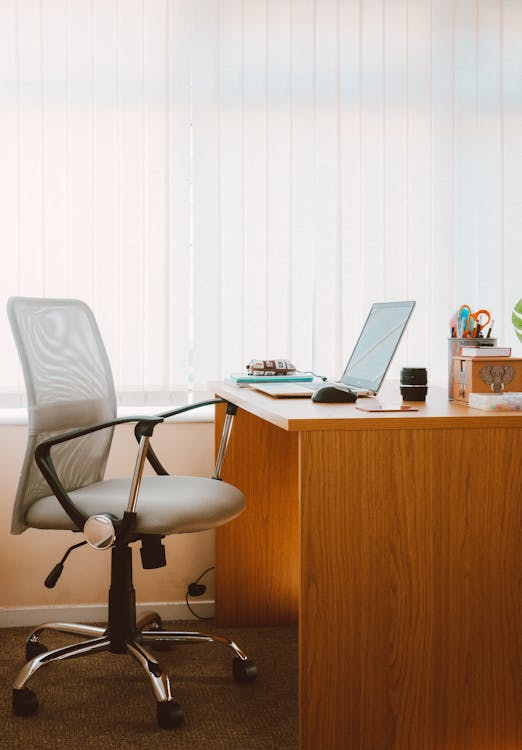
A fixed desk offers no built-in prompt to change posture, the default is staying seated for the entire workday.
The cardiovascular risk is only part of the picture. Back pain is the most immediate complaint: 52.5% of office workers experience lower back pain, and 80.81% show musculoskeletal disorders in at least one body region (Scientific Reports / PMC, Nov 2025). Those aren't outlier cases, they're the statistical norm for a desk-based workforce.
There's also a threshold effect that's easy to miss. More than 10.6 hours of daily sedentary time is associated with heart failure and cardiovascular death, even among people who exercise regularly (ScienceDaily / AHA, Nov 2024). Hitting the gym before work doesn't cancel out eight hours in a chair. The sedentary exposure itself carries independent risk.
Does that mean everyone needs a standing desk immediately? Not quite. But it does mean that "I sit all day and feel fine" isn't a risk-free baseline. The harm accumulates over years, not days.
In a cohort of 481,688 office workers followed over 12.85 years, those classified as mostly-sitting workers showed a 16% higher all-cause mortality risk and a 34% higher cardiovascular mortality risk compared to non-sitting workers. The relationship was dose-dependent: more daily sitting time correlated with progressively higher risk (JAMA Network Open, Jan 2024).
A good chair mat can reduce floor fatigue for seated workers, but it doesn't address the underlying sedentary time problem.
Do Standing Desks Actually Improve Your Health?
The strongest evidence for sit-stand desks comes from a 24-week cardiometabolic study that tracked what happened when workers actually used them consistently. Triglycerides dropped 17%, insulin resistance improved 23%, and vascular endothelial function improved 65%, rising from 4.9% to 8.1% (PMC9578685, Oct 2022). Those are meaningful numbers, not marginal improvements.
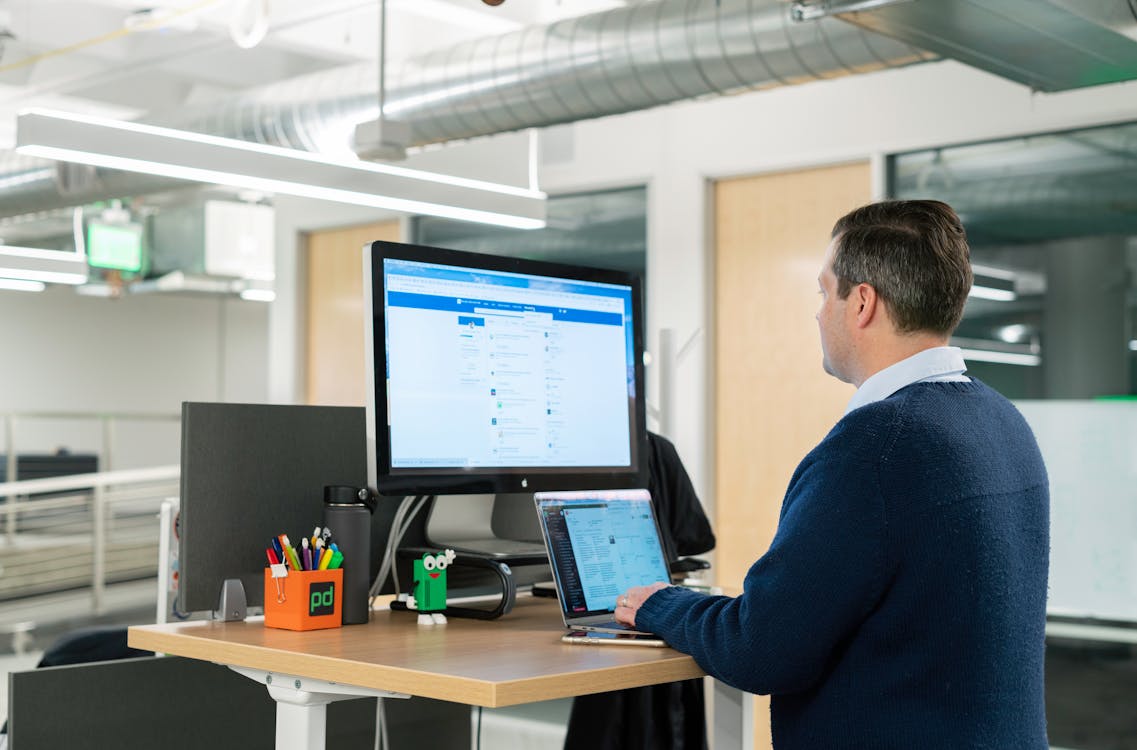
Consistent sit-stand desk use, not just owning one, drives the cardiometabolic improvements the research documents.
Back pain data is similarly encouraging. A 2024 meta-analysis of 12+ studies found ergonomic interventions including sit-stand desks reduced lower back pain odds by 47% (OR 0.53, 95% CI 0.40–0.70) (PMC12073017, 2024). The mechanism isn't mysterious: postural variation reduces sustained muscle loading on the lumbar spine.
What about daily sedentary time, the most direct measure? A 2025 systematic review found sit-stand desks reduced daily sedentary time by 68.7–77.7 minutes at the 3–6 month mark compared to control groups (SAGE Journals, Jan 2025). That's meaningful accumulation over a year. And user satisfaction holds up: 77–91% of standing desk users in studies reported they'd choose to use one again (PMC12063225, Apr 2025).
In a 24-week study of office workers using sit-stand desks, researchers measured significant cardiometabolic improvements: triglycerides fell 17%, insulin resistance improved 23%, and vascular endothelial function improved 65%, rising from 4.9% to 8.1%. These changes were attributed to the reduction in sustained sedentary time, not to standing per se (PMC9578685, Oct 2022).
So the health case is real. But it's also specific, the benefit requires consistent use over months, not occasional standing. And there's a critical caveat that the marketing materials skip.
The Standing Desk Downside Nobody Talks About
Standing too long carries its own documented risks. Women who stand more than 4 hours per day show an OR of 2.99 for varicose veins; for men the risk is even higher at OR 7.93 (PMC4591921, PMC systematic review). That's not a rare complication, it's a consistently replicated finding across occupational health studies.
Static standing compounds problems fast. Two hours of continuous standing increases discomfort 4–6 fold compared to baseline. Workers who stand more than 30 minutes per hour have a 2.1x higher back pain risk than those who alternate (PMC4591921). Separately, 40% of workers in prolonged standing tasks developed lower back pain, a rate roughly comparable to sedentary office work.
What's going on here? The problem isn't sitting. And it's not standing either. Static posture in any direction is the issue. The musculoskeletal system tolerates sustained loading poorly regardless of the position that loading occurs in. Joints, discs, and soft tissue need variation, not a specific posture held for hours.
Our finding: Most standing desk marketing frames the choice as "stand more, sit less." The research frames it more precisely as "interrupt prolonged posture." A sit-stand desk is only as useful as the behavior it enables. Owning one and standing for 20 minutes at 9 AM doesn't fulfill the promise.
This reframing matters practically. Someone who buys a sit-stand desk and immediately stands for 4-hour stretches will trade one set of problems for another. The mechanism that generates the health benefits, regular postural variation, requires intentional habit design, not just hardware.
A systematic review of occupational health studies found that standing more than 4 hours per day was associated with varicose vein risk ORs of 2.99 (women) and 7.93 (men). Two hours of continuous static standing increased discomfort 4–6 fold; workers standing more than 30 minutes per hour showed a 2.1x higher back pain risk. The authors concluded that movement interruption, not standing itself, is the protective factor (PMC4591921).
What Is the Optimal Sit-Stand Ratio?
The clearest answer comes from a 2022 RCT that tested multiple sit-stand ratios against all-sitting workdays. Workers who alternated in 15:15 (sit:stand) and 18:12 cycles reported the best outcomes for back and leg comfort, and all-sitting was consistently the least preferred condition (PubMed 34689018, 2022). The minimum effective dose appears to be 6 minutes of standing per 30-minute cycle.
Starting at that minimum makes sense. Most people who jump straight to 50/50 standing report significant leg and foot fatigue within the first week, which usually kills the habit. A better ramp: start with 15 minutes of standing per hour, hold that for two weeks, then increase to 20–25 minutes as tolerance builds.
Practical tools help more than willpower does. A simple desk timer or phone reminder at 25-minute intervals works fine. Dedicated apps like Stretchly or Time Out (macOS) automate the interruption without requiring you to watch the clock. If you're ready to buy, our best standing desks guide covers every price point with tested picks.
Don't underestimate the floor. An anti-fatigue mat meaningfully reduces leg fatigue during standing intervals, the cushioned surface activates small micro-movements that improve circulation. It's not optional if you plan to stand more than 30 minutes at a stretch.
Our finding: The research on optimal ratios is surprisingly consistent, 15:15 and 18:12 both outperform heavier standing schedules in user preference. Starting conservative and building up is more important than hitting an ideal ratio immediately. Habit durability matters more than perfect numbers.
Standing Desk vs Sitting Desk — Quick Comparison
Neither desk type is inherently superior. The comparison only makes sense in context of how you'll actually use each one.
| Dimension | Sitting Desk | Sit-Stand Desk |
|---|---|---|
| Back pain risk | High (52.5% LBP prevalence in office workers) | Reduced 47% with regular posture alternation |
| CVD mortality risk | +34% if mostly sedentary throughout day | Reduced through daily sedentary time interruption |
| Calorie burn | Baseline | +15 cal/hr standing, ~54 extra calories/6-hr standing day |
| Prolonged-use risk | High if sedentary all day | Elevated if standing without movement variation |
| Cognitive performance | Slight edge for highly complex tasks | Similar; minor disadvantage for very demanding cognitive work |
| Cost | $100–$500 (fixed desks) | $300–$2,000+ (electric sit-stand models) |
The cognitive note is worth a sentence. Some research suggests complex analytical tasks benefit slightly from seated conditions, possibly because sustained standing draws low-level attentional resources. For most knowledge work tasks (email, writing, calls), there's no meaningful difference.
Who Should Buy a Standing Desk?
The decision is cleaner than most buying guides suggest. It comes down to your current behavior, not your aspiration.
A sit-stand desk makes strong sense if you:
- Sit 6 or more hours per day with minimal movement breaks
- Already experience lower back pain or neck tension during work hours
- Are building a permanent home office and plan to use the same desk for 3+ years
- Work long hours that push daily sedentary time above the 10.6-hour risk threshold
A fixed desk is a reasonable choice if you:
- Already move frequently, hourly walks, active job duties, short desk sessions
- Have a tight budget under $300 and will pair your setup with disciplined hourly break habits
- Use a standing desk converter instead (a valid middle option at $100–$300)
If you're in the first category, our best standing desks guide covers tested options from under $400 to premium motorized setups. If you're pairing a sit-stand setup with a good seat, the ergonomic chair article covers what actually matters in chair specs for health, it's not always what's marketed.
Frequently Asked Questions
Is it better to sit or stand all day?
Neither. Both prolonged sitting and prolonged standing carry documented health risks. A 2025 systematic review found sit-stand desks reduce sedentary time by 68–78 minutes per day on average (SAGE Journals, 2025). The evidence consistently points to alternating postures: stand at least 6 minutes per 30-minute cycle.
How long should you stand at a standing desk?
A 2022 RCT found the most comfortable patterns were 15:15 and 18:12 sit-to-stand ratios, with standing at least 6 minutes per 30-minute cycle (PubMed 34689018, 2022). Starting with 15-minute standing intervals and building over 2–3 weeks avoids early fatigue that kills the habit.
Do standing desks actually help with back pain?
Yes, with evidence. A 2024 meta-analysis found ergonomic interventions including sit-stand desks reduced lower back pain odds by 47% (OR 0.53, 95% CI 0.40–0.70) (PMC12073017, 2024). The benefit comes from movement and postural variation, not from standing itself, static posture in any direction is the actual problem.
Is a standing desk worth the money?
For most remote workers sitting 6+ hours daily, yes. Sit-stand desks range from $300–$2,000+. The 24-week evidence shows reduced sedentary time, improved triglycerides (−17%), and a 65% improvement in vascular function (PMC9578685, Oct 2022). Budget options around $400–$500 deliver the core benefit without premium pricing.
Can you lose weight using a standing desk?
The calorie math is real but modest. Standing burns roughly 15 more calories per hour than sitting, about 54 extra calories over a 6-hour standing workday (NEAT research via iMovR). That's not a weight-loss mechanism. The cardiovascular and metabolic improvements (triglycerides, insulin resistance, vascular function) are the more meaningful health outcomes.
The Verdict
Neither all-day sitting nor all-day standing is what the research recommends. A sit-stand desk isn't a magic health device, it's a tool for breaking up sustained posture, and it only delivers results when used consistently over months. The data on back pain reduction, triglycerides, and vascular function after 24 weeks is genuinely compelling. If you currently sit through a full workday, that investment is justified.
The behavior matters as much as the hardware. Set a timer. Build the habit slowly. Add an anti-fatigue mat from day one. If you're ready to act, our best standing desks guide covers tested picks at every price point.