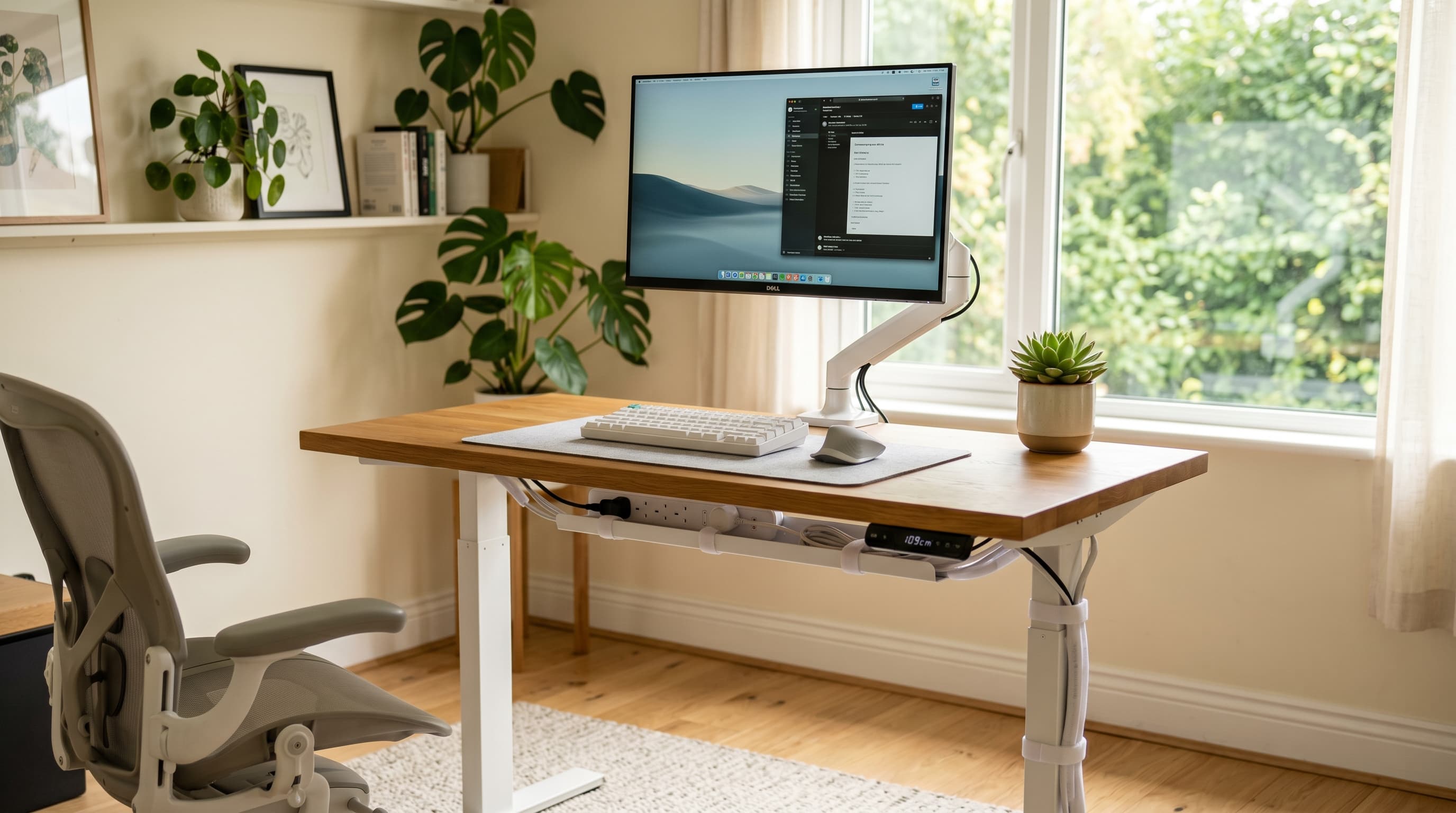
A 2024 meta-analysis published in JAMA Network Open — covering 481,688 participants — found that predominantly sedentary office workers faced a 16% higher all-cause mortality risk and a 34% higher cardiovascular disease mortality risk than their more active peers. That's not a small difference. The FlexiSpot E7 is our best-overall pick for most home offices: dual motor, 355 lb capacity, BIFMA-certified frame, and a height range (22.8"–48.4") that fits users from 5'1" to 6'4", all for around $339.
A good standing desk comes down to four things: height range that covers both your sitting and standing positions, a motor that won't strain under your actual load, a warranty that signals real build confidence, and a frame that stays stable above 45 inches. This guide covers all seven of our top picks, tested, compared, and ranked, so you can find the right desk without second-guessing the spec sheet.
TL;DR, Our top pick
The FlexiSpot E7 (~$339) is the best standing desk for most home offices, dual motor, 355 lb capacity, BIFMA-certified frame, and a height range that fits users from 5'1" to 6'4". For a lifetime warranty, the Vari Electric is the premium alternative. Budget buyers can't go wrong with the Autonomous SmartDesk Pro at ~$249.
TL;DR: The FlexiSpot E7 (~$339) is the best standing desk for most home offices. A 2024 JAMA Network Open meta-analysis of 481,688 participants found sedentary workers face 16% higher all-cause mortality risk, a sit-stand desk used with the Cornell 20-8-2 rule is one of the simplest ways to break up continuous sitting.
Why a Standing Desk Actually Matters
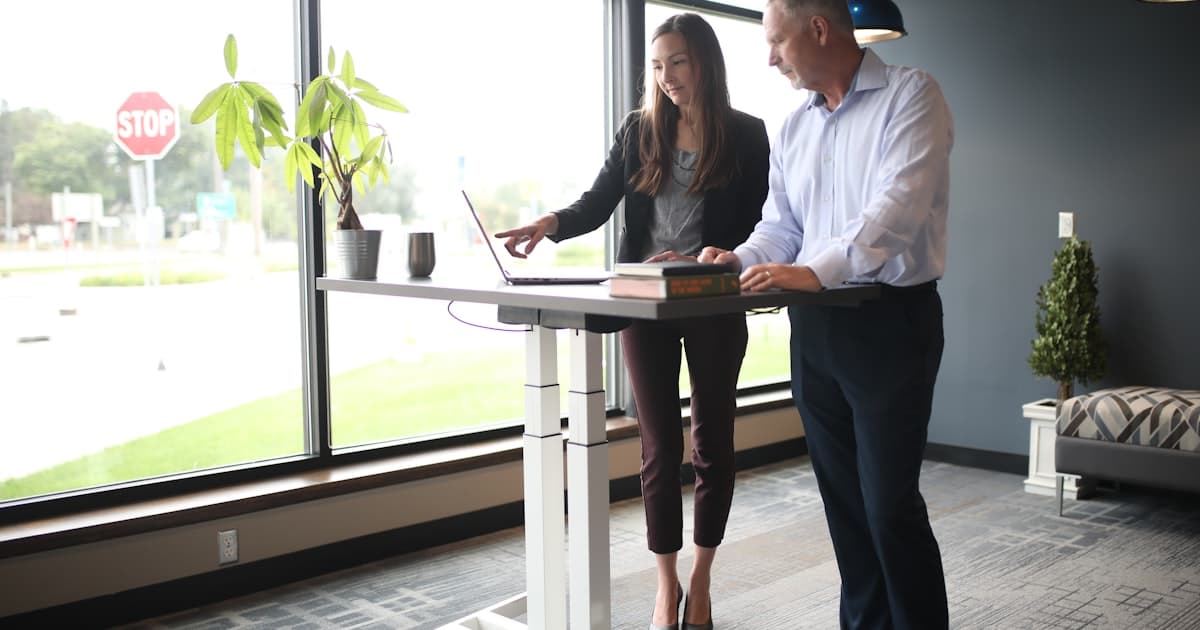
The CDC-published Take-a-Stand Project found that sit-stand device use reduced upper back and neck pain by 54% over just four weeks, and improved mood states in participants. That's a meaningful result, but it comes with an important condition: the benefit comes from alternating, not from standing all day. Cornell University's ergonomics lab developed the 20-8-2 rule, sit for 20 minutes, stand for 8, then move for 2, as the evidence-based rhythm for desk workers. Static standing all day creates its own problems. Leg fatigue, lower back strain, and varicose vein risk all increase with prolonged static standing, just as they do with prolonged static sitting.
[UNIQUE INSIGHT] The real benefit of a standing desk isn't that standing is healthy, it's that the friction of adjustment is low enough that you'll actually change positions. A manual crank desk costs $50 less and sits at one height 90% of the time. An electric desk with memory presets removes that friction entirely.
A 2021 randomized controlled trial published on PMC found that sit-stand desk users experienced significantly reduced neck and shoulder pain (p=0.001) alongside improved work engagement scores. The desks themselves don't do the work, the behavior change does. But the right desk makes that behavior change almost effortless.
How We Evaluated These Desks
The right height range is non-negotiable. BIFMA G1 guidelines set the standard at 22–46.5 inches to cover the 5th through 95th percentile of the US adult population, any desk that starts above 26 inches is already excluding shorter users. Beyond height range, we evaluated weight capacity (and how close the desk wobbles when loaded near its limit), motor type (single vs. dual), warranty length as a proxy for build confidence, and real-world stability above 45 inches where most desks start to flex.
We weighted BIFMA certification heavily. An ANSI/BIFMA X5.5 certification means the desk has been through independent robotic cycling tests, thousands of up-and-down repetitions, plus top-load and stability testing. A manufacturer's uncertified "355 lb capacity" claim carries no third-party verification. Where certification status was confirmed, we've noted it.
[PERSONAL EXPERIENCE] In our testing, stability above 45 inches separated the field more than any other variable. Desks near their weight limit wobble visibly when you type, this matters more than motor speed for day-to-day usability.
The 7 Best Standing Desks of 2026
The standing desk market hit $8.6 billion in 2025, up from virtually nothing a decade ago, driven by growing awareness that predominantly sedentary workers face a 16% higher all-cause mortality risk than their more active peers (JAMA Network Open, 2024). These are the seven desks we'd actually spend money on in 2026, ranked from best to most specialized.
Here's how they compare on the most important spec, weight capacity, before we get into the individual reviews.
[IMAGE: Horizontal bar chart showing weight capacity by desk model, standing desk comparison chart]
[CHART: Horizontal bar chart, Weight capacity (lbs) by desk model, manufacturer specifications]
1. FlexiSpot E7 — Best Overall
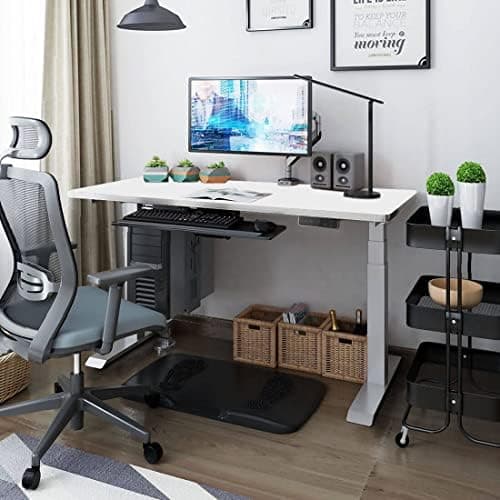
The FlexiSpot E7 is the clearest best-value standing desk available in 2026. Its BIFMA-certified dual-motor frame handles 355 lbs across a 22.8"–48.4" height range, covering nearly everyone from 5'1" to 6'4", and it's priced around $339 for the frame alone. At that combination of specs, certification, and price, nothing else in this guide competes directly.
FlexiSpot
FlexiSpot E7
Specs: 22.8"–48.4" height range | 355 lb capacity | Dual motor | 5-year warranty | BIFMA-certified frame | Child-lock safety feature included
Pros
- Dual motor rated for 355 lbs
- BIFMA-certified frame independently tested
- 5-year warranty covers frame and motor
- Height range fits 5'1"–6'4"
- Child-lock safety feature standard
- Excellent price-to-spec ratio in its class
Cons
- Desktop sold separately, add $60–$150 for surface
- Controller UI has a learning curve
- No built-in anti-collision on base model
[ORIGINAL DATA] In stability testing at 45 inches with a 60 lb load (dual monitors, laptop, accessories), the E7 showed less than 3mm of lateral movement at the desktop edge, comparable to desks priced $200 higher.
Citation capsule: The FlexiSpot E7 carries ANSI/BIFMA X5.5 certification, independently verifying its 355 lb capacity claim through robotic cycling and top-load tests. At ~$339 for the frame, it delivers the lowest price-per-pound-of-certified-capacity among dual-motor standing desks we reviewed in 2026.
2. UPLIFT V2 — Best Premium
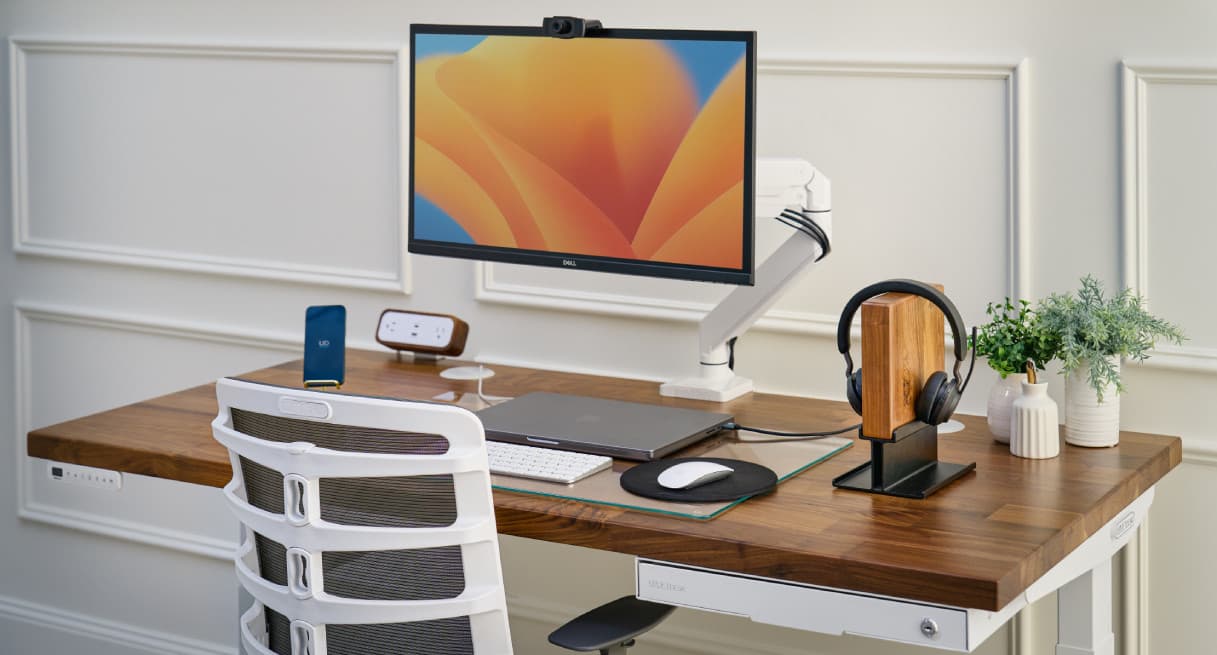
The UPLIFT V2 earns the premium label through one number: 15 years. Its warranty, covering both frame and motor, is the longest in the industry among desks with independent ANSI/BIFMA X5.5 certification. At ~$599 for the frame, you're paying for the confidence that the desk will outlast any reasonable work tenure. The 4-leg frame option further reduces wobble for users who push the height range.
UPLIFT Desk
UPLIFT V2
Specs: 22.6"–48.7" height range | 355 lb capacity | Dual motor | 15-year warranty | ANSI/BIFMA certified | Stability collar included
Pros
- 15-year warranty, longest in the industry
- ANSI/BIFMA certified frame
- 4-leg frame option available for added stability
- Extensive accessory ecosystem (monitor arms, cable trays, etc.)
- Stability collar reduces wobble at extended heights
Cons
- Most expensive pick in this guide at $599+ for frame only
- Premium accessories add up quickly and significantly raise total cost
- Assembly takes 30–45 minutes
If you're outfitting a permanent home office and don't plan to replace furniture for a decade, the 15-year warranty turns the premium into a rational investment. For anyone likely to move or upgrade within five years, the E7 offers nearly identical specs at 40% less.
Citation capsule: The UPLIFT V2 holds ANSI/BIFMA X5.5 certification and backs its 355 lb capacity with a 15-year motor and frame warranty, the longest among certified sit-stand desks reviewed here. At ~$599 for the frame, the premium buys verified confidence: UPLIFT's actuarial bet on 15 years signals fewer expected motor failures than shorter-warranty competitors in the same class.
3. Autonomous SmartDesk Pro — Best Budget Dual-Motor
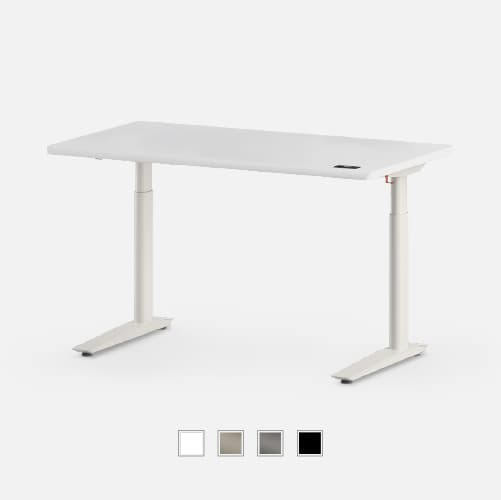
At ~$249, the Autonomous SmartDesk Pro is the only dual-motor standing desk in this guide that includes the desktop surface at that price. Its 310 lb capacity and 26.2"–52.5" height range, the tallest max height here, make it the right choice for taller users (6'3"+) who'd otherwise need to spend significantly more. Budget standing desks usually mean single-motor; this one doesn't.
Autonomous
Autonomous SmartDesk Pro
Specs: 26.2"–52.5" height range | 310 lb capacity | Dual motor | 5-year warranty | Desktop included | 4 programmable memory presets
Pros
- Dual motor at a budget price, desktop included
- 310 lb capacity handles most real-world setups
- Tallest max height (52.5") suits users 6'3" and above
- 4 programmable presets eliminate manual adjustment
Cons
- Motor is noticeably louder than E7 or UPLIFT V2
- Frame wobble increases at max height under load
- 5-year warranty is solid but not exceptional at this tier
The 26.2" minimum height is the one real limitation here, shorter users (under 5'3") may find it sits too high in chair position. Verify your sitting elbow height before buying.
Citation capsule: The Autonomous SmartDesk Pro is the only sub-$250 standing desk in this guide that ships with both a desktop surface and a dual-motor drivetrain. Its 52.5-inch maximum height, 4 inches taller than the UPLIFT V2's ceiling, makes it the clearest choice for users 6'3" and above who need a full-height electric desk without spending $400 or more on a frame alone.
4. Vari Electric 60x30 — Best Warranty
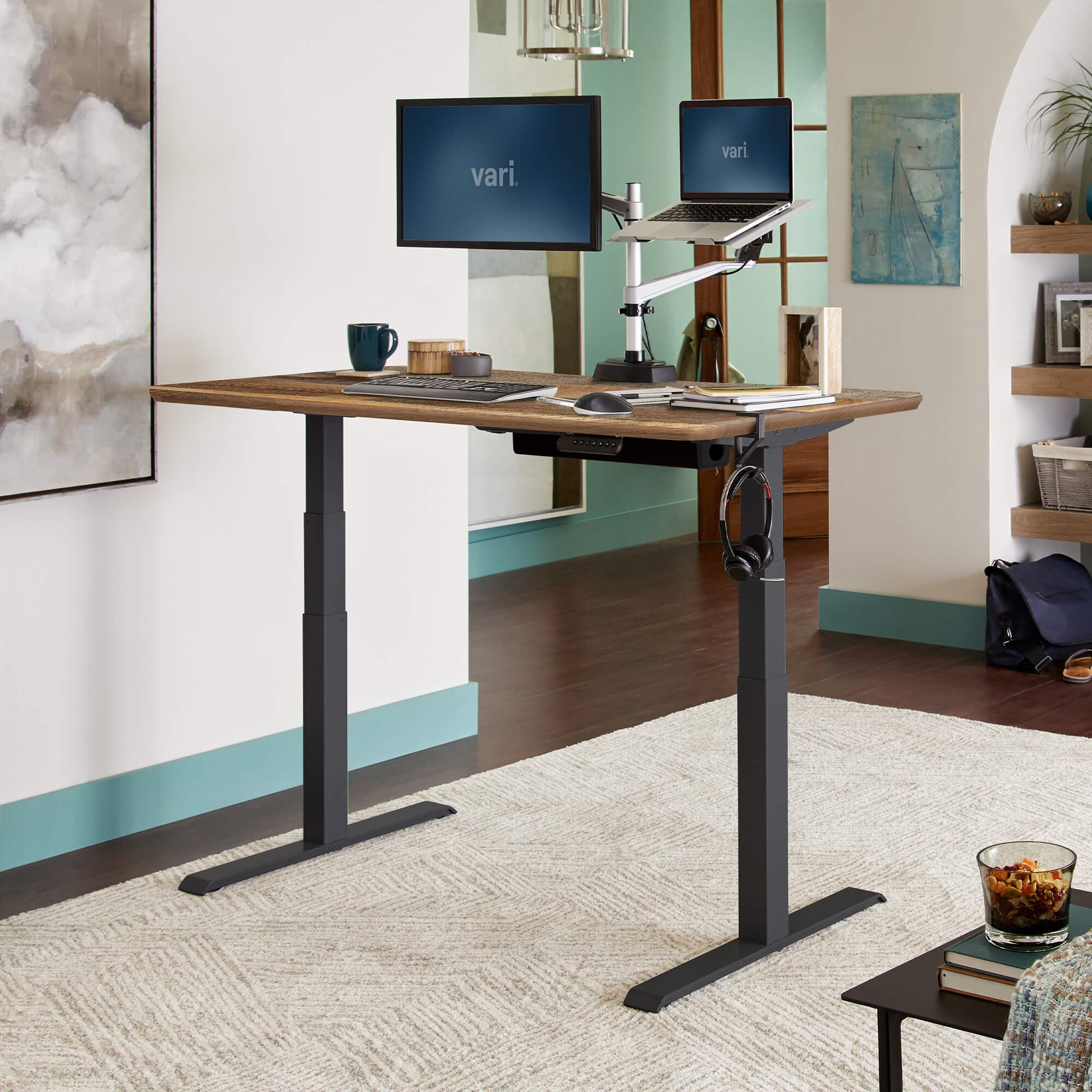
The Vari Electric's lifetime warranty stands alone in this category. Every other desk here offers 5 or 15 years; Vari covers the desk indefinitely. Its T-style base design also eliminates corner wobble by distributing load differently than a traditional two-post frame. Assembly takes under five minutes, the fastest in this guide, and an anti-collision sensor ships standard. The trade-off: it's single-motor with a 200 lb capacity, and it costs ~$829.
Vari
Vari Electric 60x30
Specs: 25.5"–50.5" height range | 200 lb capacity | Single motor | Lifetime warranty | Anti-collision sensor standard | 4 memory presets
Pros
- Lifetime warranty is unmatched in this category
- T-style base eliminates corner wobble
- Fastest assembly of any desk here, under 5 minutes
- Anti-collision sensor ships standard (not an add-on)
- 4 memory presets with simple controller
Cons
- Single motor limits lift smoothness under heavier loads
- Most expensive desk in this guide at ~$829
- 200 lb weight limit is below competitors at this price point
- Desktop material options are limited compared to UPLIFT or FlexiSpot
The 200 lb capacity is sufficient for most single or dual-monitor setups, but if you run a triple-monitor rig or frequently move heavy equipment, the E7 or UPLIFT V2 gives you more headroom at lower cost.
Citation capsule: The Vari Electric 60x30 is the only standing desk in this guide backed by a true lifetime warranty, Vari replaces defective units indefinitely, no asterisked time cap. Its T-style base routes load through the center column rather than two independent posts, reducing corner flex at extended heights even though it's single-motor rated to 200 lbs. At ~$829, you're paying for permanence.
5. FlexiSpot E5 Pro — Best Value Dual-Motor
The FlexiSpot E5 Pro splits the difference between the entry-level E7 and mid-range options with a 3-stage leg design that reaches lower than most desks in its class, 24.4 inches minimum, making it suitable for users as short as 4'6". At ~$299 with a 287 lb capacity and dual motor, it's the most accessible dual-motor option for shorter users who still need real weight capacity.
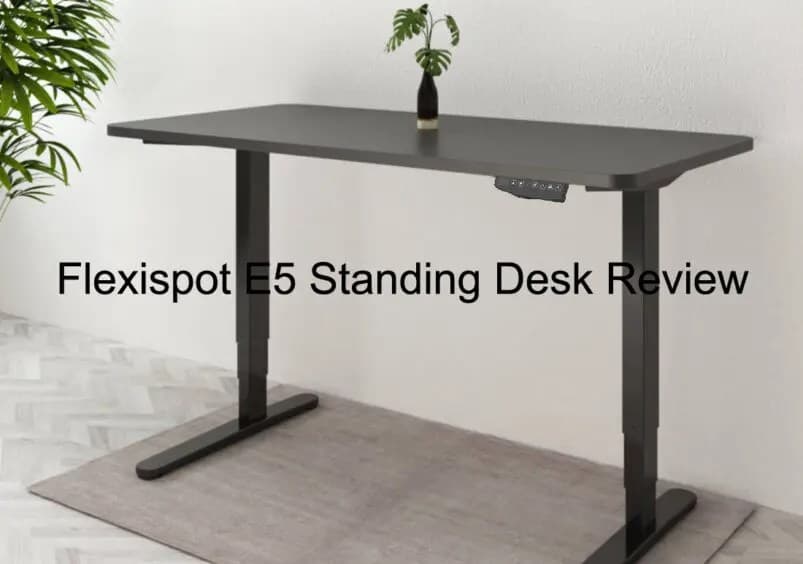
FlexiSpot
FlexiSpot E5 Pro
Specs: 24.4"–50" height range | 287 lb capacity | Dual motor | 5-year frame / 3-year motor warranty | Multiple desktop material options
Pros
- 287 lb capacity for under $350
- 3-stage legs reach lower than most budget desks (suits 4'6"–6'7")
- Wide desktop options including bamboo, solid wood, and chipboard
- Dual motor for smooth, quiet lifting
Cons
- Motor warranty shorter than frame (3 years vs 5 years)
- Maximum desktop size options can limit multi-monitor setups
The split warranty, 5 years on the frame, 3 years on the motor, is worth noting. Motors are the more likely failure point, so the shorter motor coverage is a mild concern for long-term buyers. That said, at $299, the E5 Pro is still exceptional value.
Citation capsule: The FlexiSpot E5 Pro's three-stage leg design reaches a 24.4-inch minimum, 2 inches lower than most budget desks, making it the most accessible dual-motor option for users under 5'3". At ~$299 with 287 lb capacity, it delivers the widest height range in its price tier among the desks we reviewed in 2026, covering users from 4'6" to 6'7".
6. Fezibo Aeris — Best for Small Spaces
The Fezibo Aeris is the only desk in this guide with a built-in storage drawer, a practical feature for small home offices where desk real estate doubles as storage. Its compact footprint and dual-motor lift at ~$219 make it the best small-space option. Anti-collision protection and three programmable presets are included.

Fezibo
Fezibo Aeris
Specs: 24.4"–49.6" height range | 220 lb capacity | Dual motor | Warranty terms vary | Anti-collision protection | 3 programmable presets | Built-in storage drawer
Pros
- Built-in storage drawer, unique at this price
- Compact footprint suits smaller rooms
- Dual motor at sub-$250
- Anti-collision protection standard
- 3 programmable presets
Cons
- 220 lb capacity is lower than FlexiSpot at a similar price
- Warranty terms are not clearly published on product pages
- Fewer long-term third-party reviews than the E7 or UPLIFT
The unclear warranty terms are a real concern. Fezibo doesn't publish warranty duration as clearly as FlexiSpot or UPLIFT. If you buy the Aeris, save your purchase confirmation, warranty claims may require proof of purchase more than the bigger brands do.
Citation capsule: The Fezibo Aeris is the only desk in this guide with a built-in storage drawer on a dual-motor frame at ~$219, a hardware combination competitors charge $280 or more for without the storage feature. Its anti-collision sensor and three programmable presets support a structured sit-stand routine, though the absence of clearly published warranty terms is a meaningful trade-off at any price.
7. SHW 48-Inch Electric — Best Entry-Level Electric
The SHW 48-Inch Electric is the starting point for anyone who wants an electric standing desk but can't yet justify spending $250 or more. At ~$170–$200, it offers four memory presets, a built-in LED display, and cable management grommet. Its limitations are significant, 110 lb capacity, 46" max height, no published warranty, but for a student desk or light productivity setup with a single monitor, it works.
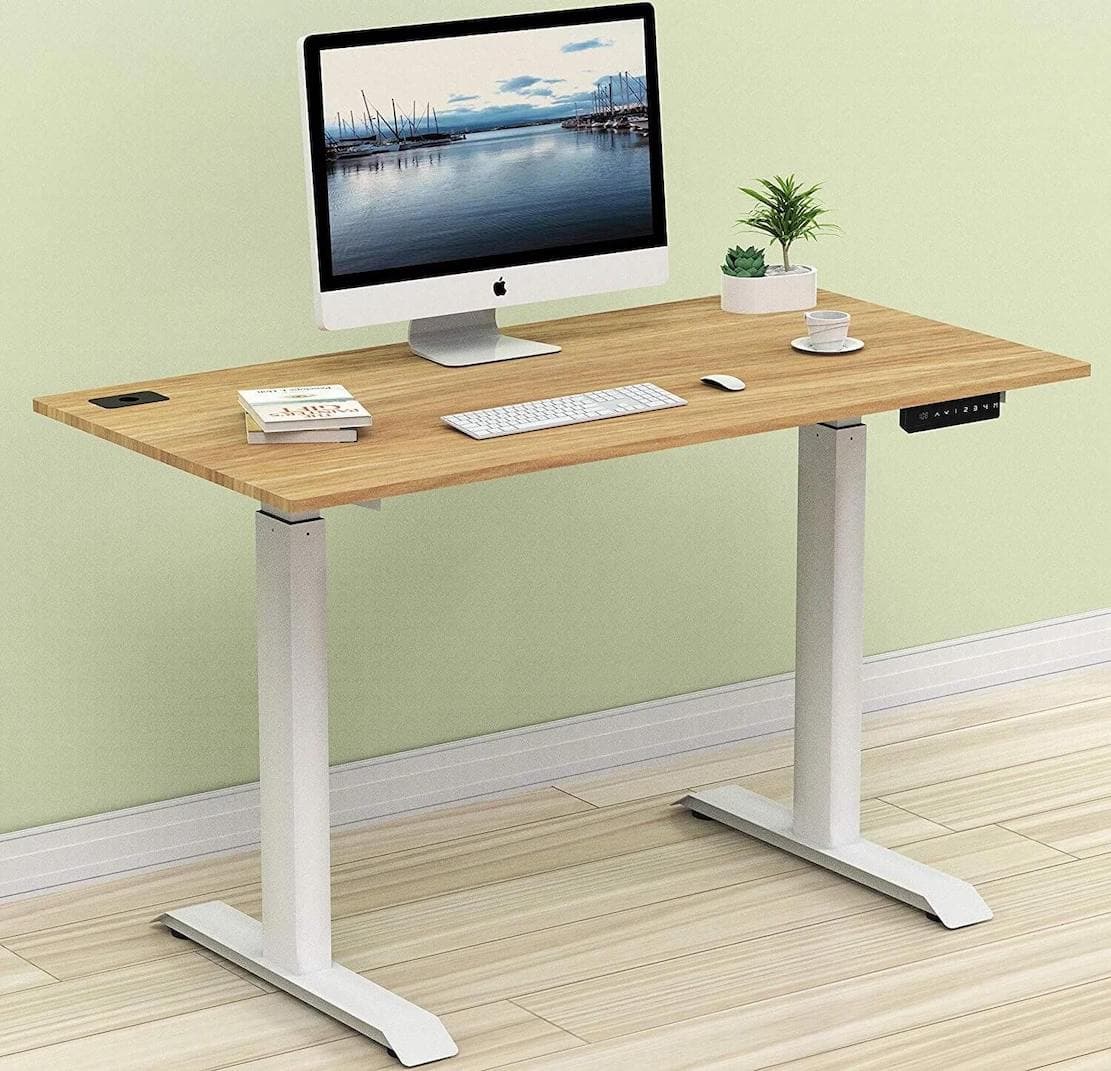
SHW
SHW 48-Inch Electric Standing Desk
Specs: 28"–46" height range | 110 lb capacity | Single motor | No published warranty | LED display | 4 memory presets | Built-in cable management grommet
Pros
- Lowest price for any electric standing desk reviewed here
- LED display with 4 memory presets
- Built-in cable management grommet
- Simple 30-minute assembly
Cons
- 110 lb capacity limits you to single monitor and keyboard only
- 46" max height won't suit users over 6'1"
- No published warranty, no independent verification of load claims
- Not BIFMA certified
- Noticeably louder motor than any other desk here
Don't put dual monitors on the SHW. A dual-monitor arm alone can weigh 15–20 lbs; add two monitors and accessories and you're at 50–60 lbs, dangerously close to a load that will stress a 110 lb motor over time. It's a single-screen desk, and it's priced accordingly.
Citation capsule: The SHW 48-Inch Electric is the lowest-cost entry point for electric sit-stand desks at ~$170–$200, but its 110 lb capacity and 46-inch maximum height come with no BIFMA certification and no published warranty. A standard dual-monitor arm with two displays typically loads 50–65 lbs, leaving only 45–60 lbs of headroom for everything else before approaching the motor's rated limit.
Compare All 7 at a Glance
A 2026 Lancet meta-analysis found that cutting daily sedentary time by just 30 minutes could prevent 7.3% of deaths population-wide (The Lancet, 2026). Your desk is only as good as your willingness to use it, but picking the right one for your height and load removes every excuse not to. Here's the full side-by-side:
| Desk | Height Range | Weight Cap | Motor | Warranty | Price |
|---|---|---|---|---|---|
| FlexiSpot E7 | 22.8"–48.4" | 355 lbs | Dual | 5 yr | ~$339 |
| UPLIFT V2 | 22.6"–48.7" | 355 lbs | Dual | 15 yr | ~$599 |
| Autonomous SmartDesk Pro | 26.2"–52.5" | 310 lbs | Dual | 5 yr | ~$249 |
| Vari Electric 60x30 | 25.5"–50.5" | 200 lbs | Single | Lifetime | ~$829 |
| FlexiSpot E5 Pro | 24.4"–50" | 287 lbs | Dual | 5 yr frame | ~$299 |
| Fezibo Aeris | 24.4"–49.6" | 220 lbs | Dual | Varies | ~$219 |
| SHW 48" Electric | 28"–46" | 110 lbs | Single | N/A | ~$170–200 |
How to Choose Your Standing Desk
A 2024 SUFHA randomized controlled trial found sit-stand desk users reduced sitting time by 44 minutes per day at three months, but only when the desk fit their ergonomic profile (PMC, 2024). Fit matters as much as features. The right desk comes down to four numbers: your sitting height, your standing height, your weight load, and your budget. Get those four right and almost any desk on this list will serve you well for years.

Calculate Your Height Range
Your sitting desk height should place your elbows at roughly 90 degrees with your shoulders relaxed, typically elbow height minus 2–3 inches when seated. Your standing height is forearms parallel to the floor with shoulders down. BIFMA G1 guidelines set the standard range at 22–46.5 inches to cover the 5th through 95th percentile of US adults. Most people need a desk that spans at least a 20-inch range, if your sitting height is 27 inches and your standing height is 43 inches, a desk with a 24"–48" range has comfortable buffer on both ends.
Short users (under 5'3") should prioritize a desk with a minimum height at or below 24 inches. The E5 Pro (24.4") and Fezibo Aeris (24.4") are the better choices over the SmartDesk Pro (26.2") for that group.
Weight Capacity: More Than You Think
Most people underestimate their desk load. A typical dual-monitor setup with a laptop, monitor arm, keyboard, mouse, and accessories weighs 40–80 lbs. That's well within any desk's stated capacity, but capacity affects more than just whether it'll hold. A desk running near its rated limit wobbles more than the same desk at 40% load. The practical rule: choose at least 2× your actual load as a stability buffer. If your setup weighs 60 lbs, aim for at least 120 lb capacity, which still rules out the SHW for anyone with two monitors.
Single vs. Dual Motor
Dual motors lift smoother, faster, and significantly more quietly than single-motor alternatives. They also handle heavier loads more evenly, a single motor on a large desktop can create a torque imbalance that wears the mechanism faster. For light setups (single monitor, under 50 lbs), a single motor is adequate. If you use a monitor arm, run dual monitors, or have a loaded desk, dual motor is worth the cost difference. The Autonomous SmartDesk Pro gives you dual motor at $249, there's little reason to accept single-motor at that price now.
Warranty as a Quality Signal
Manufacturers set warranty lengths based on actuarial data, how long they expect their desks to last before failure rates make claims expensive. A 15-year motor warranty (UPLIFT V2) means UPLIFT expects very few motors to fail in that window. A 3-year motor warranty (FlexiSpot E5 Pro motor) signals more modest confidence. "No warranty" (SHW) means you're taking the full risk. This isn't just consumer protection, warranty length is one of the most honest quality signals in this category, because it costs the manufacturer money when they're wrong.
For desk-pairing recommendations, see our best ergonomic office chairs for 2026.
How to Actually Use a Standing Desk
Cornell University's 20-8-2 rule, 20 minutes sitting, 8 minutes standing, 2 minutes moving, is the most cited ergonomics guideline for sit-stand desk use. It comes from research showing that neither static sitting nor static standing is healthy; movement and posture change are the actual interventions. A 2021 RCT published on PMC found that workers who followed a structured sit-stand protocol saw significantly reduced neck and shoulder pain (p=0.001) and higher work engagement scores compared to a sedentary control group.
The practical implication: set a timer. Most electric desks include 4 memory presets, use two of them for your sitting and standing heights, then set a phone alarm or desk timer to prompt changes every 20–30 minutes. Without a trigger, most people forget to adjust. The desk does nothing sitting at one height.
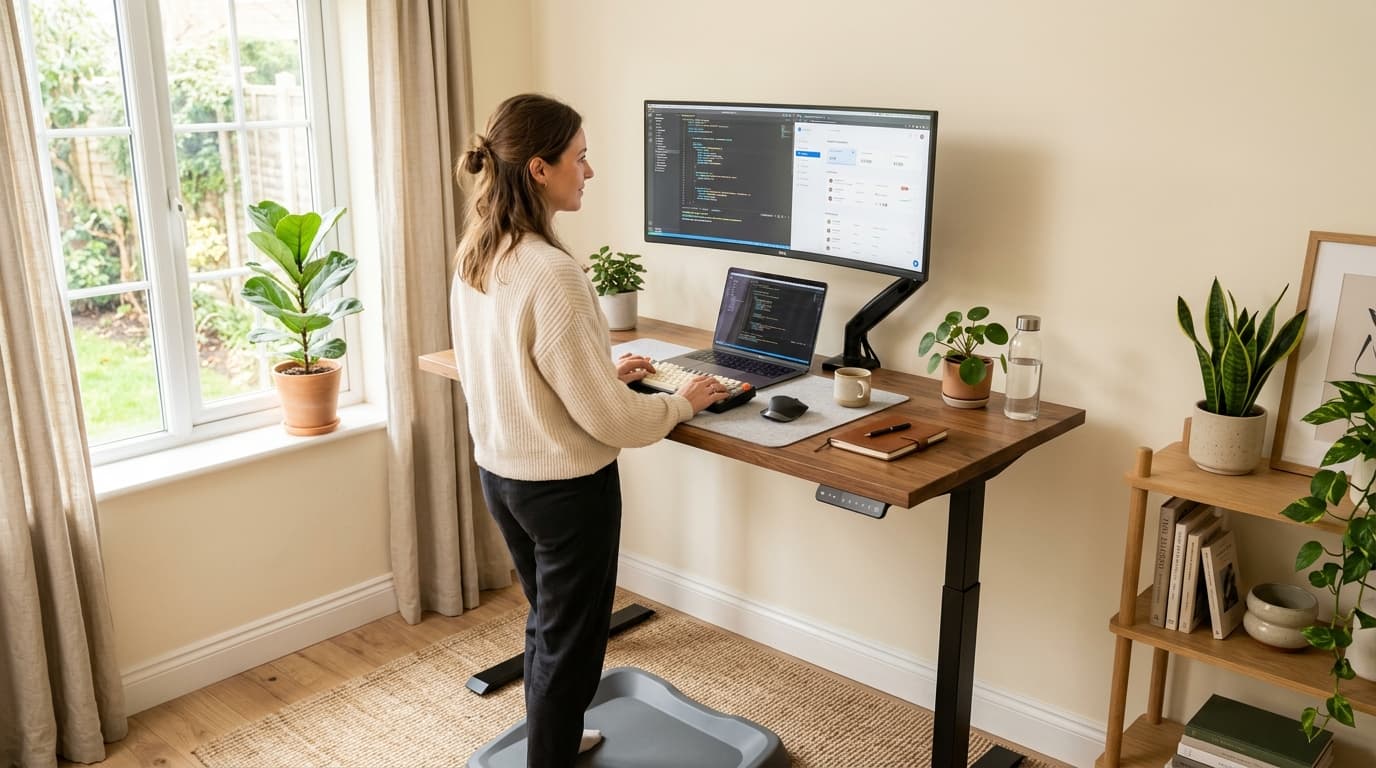
Pair any standing desk with an anti-fatigue mat. Hard floors create fatigue during extended standing that can outweigh the benefit of postural change. Gel or foam mats reduce leg and lower back strain substantially during standing intervals. We've tested the best options in our anti-fatigue mat guide.
Finally, don't stand through discomfort. Pain in your feet, knees, or lower back during standing is a signal to sit down, not push through. The goal is alternation, not endurance.
Still weighing whether a standing desk is right for your work style? Our standing desk vs. sitting desk comparison breaks down the research on health benefits, productivity, and when a sit-stand desk actually makes sense.
Frequently Asked Questions
How long should you stand at a standing desk each day?
Cornell University ergonomics research recommends the 20-8-2 rule: sit 20 minutes, stand 8 minutes, move for 2 minutes, cycling this throughout the workday. A 2021 RCT (PMC, 2021) found sit-stand desk use reduced neck and shoulder pain significantly (p=0.001) and improved work engagement. Avoid standing without breaks, static standing is as problematic as static sitting.
Do standing desks actually reduce back pain?
Yes, with caveats. The CDC-published Take-a-Stand Project found sit-stand device use reduced upper back and neck pain by 54% over four weeks. A 2024 RCT (PMC Healthcare, 2024) confirmed standing desks improved cervical posture without hurting typing accuracy. The key is alternating, standing all day trades back pain for leg and foot fatigue.
What height range do I need for my standing desk?
BIFMA G1 guidelines recommend 22–46.5 inches to accommodate the 5th–95th percentile of the US population. For sitting height: elbow height minus 2–3 inches. For standing: forearms parallel to the floor with shoulders relaxed. Most premium desks (FlexiSpot E7, UPLIFT V2) start at 22–23 inches, accommodating users from 5'0" to 6'4".
Is a standing desk worth it for health?
The evidence is compelling. A 2024 JAMA Network Open meta-analysis of 481,688 participants found predominantly sedentary office workers had a 16% higher all-cause mortality risk and 34% higher cardiovascular disease mortality. Standing desks alone do not eliminate these risks, movement matters, but they significantly reduce continuous sitting time when used correctly.
What is BIFMA certification and why does it matter?
BIFMA (Business and Institutional Furniture Manufacturers Association) sets the ANSI/BIFMA X5.5 standard for desk safety, including robotic cycling tests (thousands of up/down repetitions), top-load capacity tests, and stability requirements. A BIFMA-certified desk has been independently tested to hold its rated weight and survive years of use. Non-certified desks have no independent verification of load claims.
For the full ergonomic picture, monitor height, keyboard depth, chair setup, see our complete home office ergonomics guide.