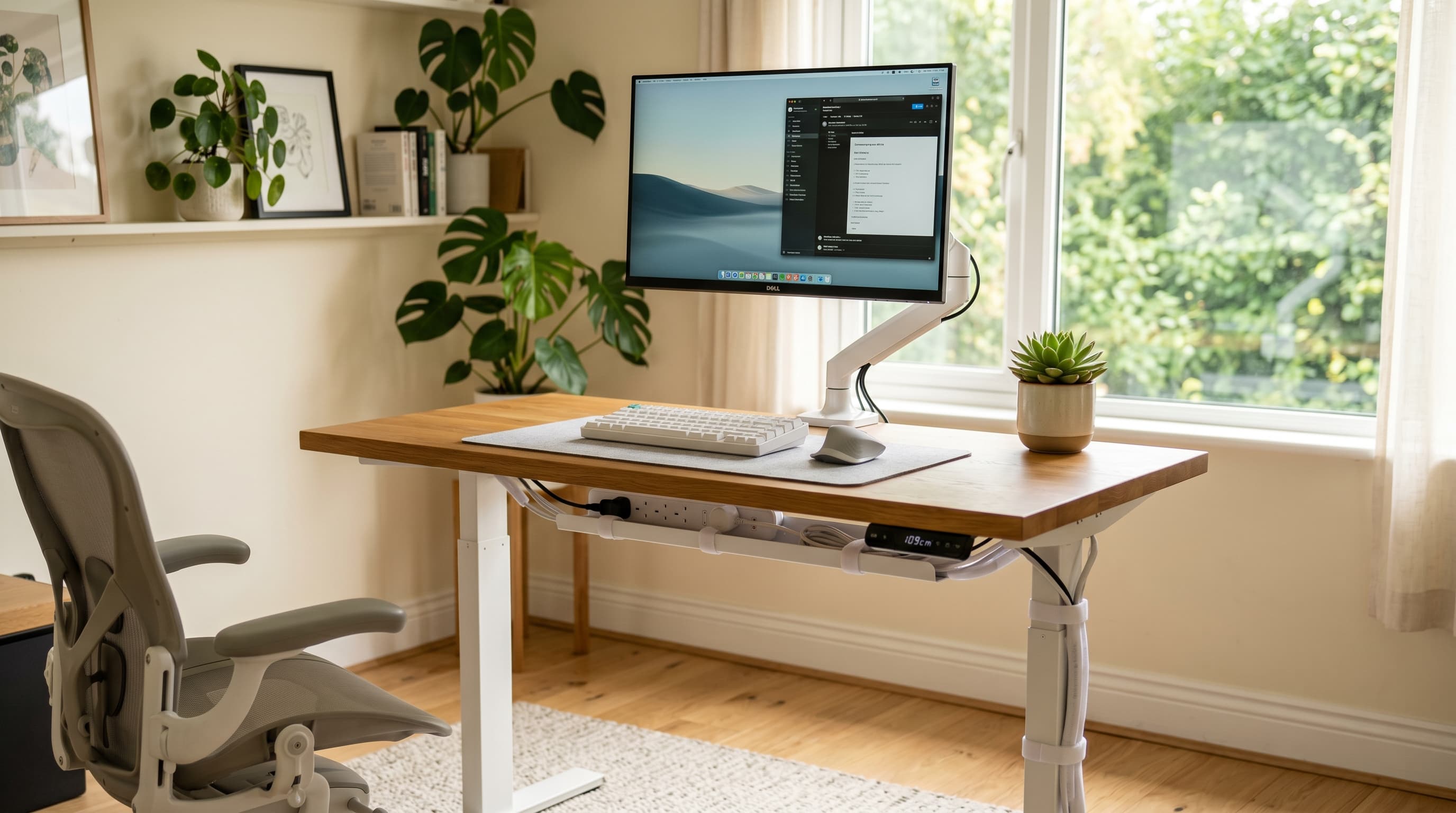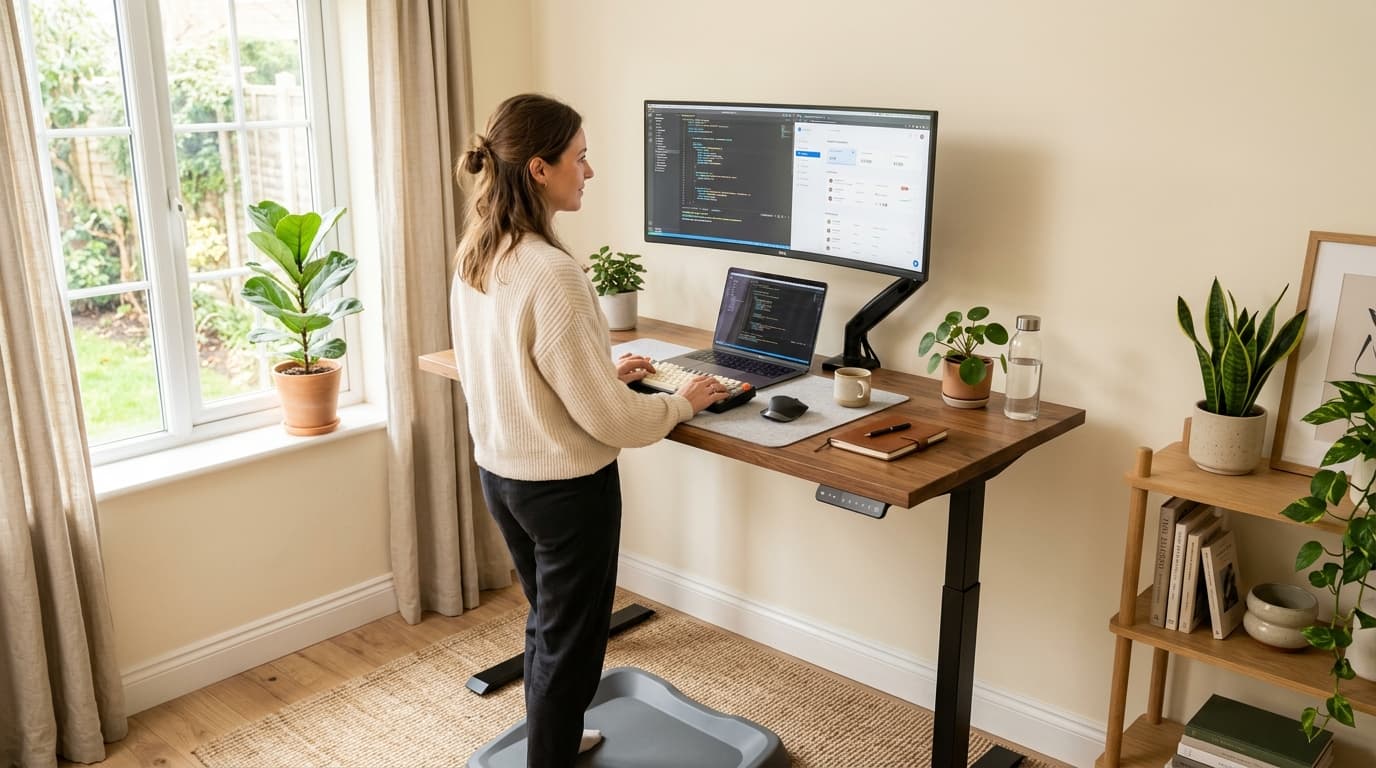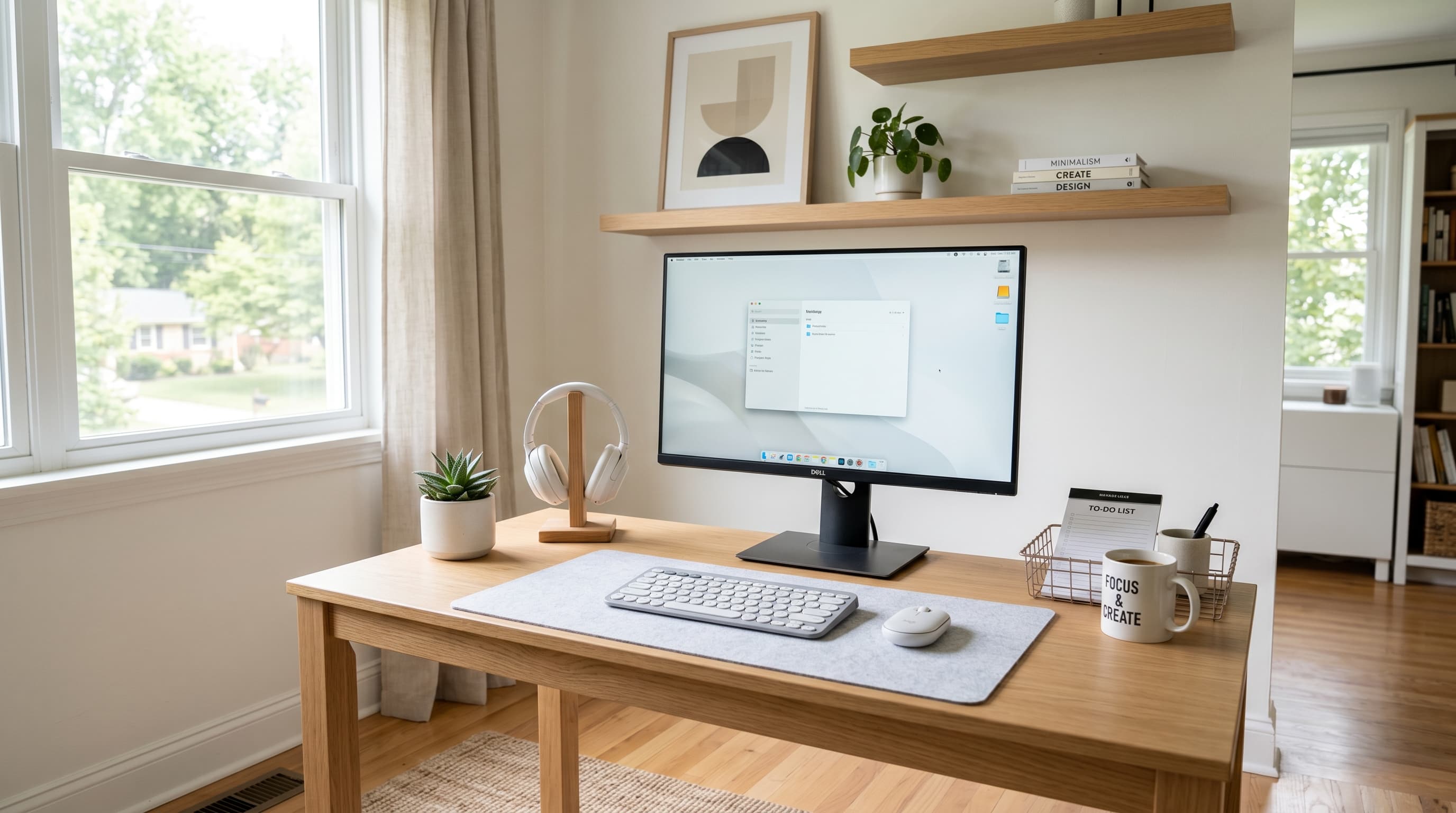
A $500 desk from a premium brand doesn't make you more productive than a $150 desk from IKEA. That's not a controversial take — it's just how the desk market works. At every price point above $200, you're paying increasingly for brand, finish options, and warranty rather than functional work surface. The six picks below deliver 90% of the value at a fraction of the cost. Two are from IKEA. One is an electric standing desk. All six will last years under normal use.
The real question isn't whether you can get a good desk under $200. You can. The question is which features matter at this price point and which ones you're being sold that you don't actually need. That's what this guide answers — starting with the picks, then the framework for choosing.
TL;DR: The IKEA BEKANT (
$179) is the best fixed desk under $200 for most home offices, stable, spacious at 63 inches wide, and looks clean. The FlexiSpot EN1 ($199) is the best budget standing desk. According to Grand View Research, the global home office furniture market was valued at $26.1 billion in 2023 and continues to grow as remote work persists, meaning more options at this price point than ever before. Full rankings, size guide, and setup tips below.
[IMAGE: Clean budget home office desk with monitor, keyboard, and minimal accessories on a white or light wood surface, search terms: home office desk setup minimal budget]
What Do You Actually Need (and What Don't You Need) in a Budget Desk?
At the $200 price point, the features that matter are surface stability, minimum usable width, adequate load capacity, and at least basic cable management. A 2023 survey by Ergotron found that 63% of remote workers cited desk space as a top constraint affecting their daily productivity (Ergotron, 2023). In other words: size and stability matter more than finish and brand.
Citation capsule: The global home office furniture market reached $26.1 billion in 2023, according to Grand View Research, with demand accelerating as hybrid and fully remote work arrangements became permanent for millions of workers (Grand View Research, 2024). That growth has pushed more manufacturers into the sub-$200 desk category, creating genuine options where previously only flimsy folding tables existed.
What Matters at This Price Point
Surface stability is the most underrated factor in a home office desk. A desk that wobbles when you type will bother you every single day, it's low-level, constant friction that erodes focus. [UNIQUE INSIGHT] A useful field test: push the far corner of any display model desk. More than 1–2mm of flex is noticeable during active use. The IKEA BEKANT and FlexiSpot EN1 both pass that test at their price points. Many cheaper competitors fail it visibly.
Surface size is the next filter. A 48-inch wide surface is the practical minimum for a single-monitor home office setup. Below that, you're constantly shuffling things to make room. Sixty inches accommodates a dual monitor setup without compromise. Most of the desks on this list land in the 47–63 inch range, all workable, with the BEKANT at 63 inches being genuinely spacious.
Load capacity matters more than most buyers check. A monitor, laptop, PC tower, and accessories add up to 30–60 lbs easily. Every desk here is rated for at least 110 lbs, which covers any realistic home office configuration.
Basic cable management, even just a grommet hole for running cables through the surface, makes a meaningful difference in how organized a setup looks and stays. It's not a premium feature; it's infrastructure.
What You Don't Need at $200
Premium hardwood veneer adds cost and visual appeal, but it doesn't change how the desk performs. Built-in USB hubs sound convenient but fail within 18–24 months and add to the desk price. Ornate metal leg designs can add $80–$100 to a desk's price with zero functional benefit. At this price point, functional priorities beat aesthetic ones.
Related: small home office desk ideas under 48 inches
[CHART: Bar chart, desk features that remote workers rate as most important (stability, surface area, cable management, storage, aesthetics), Ergotron 2023 Remote Work Survey]
The 6 Best Home Office Desks Under $200 in 2026
The six desks below were selected for surface stability, size, build quality, and honest value at the under-$200 price point. According to a 2024 report from the Freedonia Group, desks in the $100–$200 range account for the largest single segment of home office desk purchases in the U.S. (Freedonia Group, 2024), meaning this is the most competitive part of the market, and the best options here are genuinely good.
| Desk | Type | Width | Best For | Price |
|---|---|---|---|---|
| IKEA BEKANT | Fixed | 63" | Best overall fixed | ~$179 |
| IKEA ALEX Desk | Fixed + drawers | 47" | Built-in storage | ~$179 |
| FlexiSpot EN1 | Electric standing | 48"–72" | Budget standing desk | ~$199 |
| Walker Edison Farmhouse | Fixed | 55" | Style on a budget | ~$149 |
| Yaheetech Computer Desk | Fixed | 47" | Tightest budget | ~$79 |
| Sauder Beginnings Desk | Fixed | 47" | Traditional look | ~$109 |
1. IKEA BEKANT — Best Overall Fixed Desk Under $200
The BEKANT is the benchmark for what a sub-$200 desk should deliver. At 63 inches wide, it's among the largest work surfaces available under $200, and the T-leg frame with adjustable feet is stable enough that there's no noticeable wobble during active typing. The melamine surface wipes clean, holds up to normal scratches, and doesn't warp with humidity the way cheaper MDF desks do.
[PERSONAL EXPERIENCE] Assembly takes about 45–60 minutes for one person. IKEA's leg adjustment system uses a bolt-and-collar mechanism that lets you level the desk precisely on uneven floors, it's one of those small details that makes the finished result feel more solid than the price suggests. Once assembled, the BEKANT doesn't creak, doesn't flex when you push on it, and sits flat. That's not guaranteed at this price point from non-IKEA alternatives.
The cable grommet hole in the surface is a genuine feature, not an afterthought. It routes cables cleanly from monitor to power strip without leaving a dangling mess at the back edge. The only real limitations are the limited color options (white, black, dark blue, beige-green) and the fact that it ships flat-pack, which is fine if you've assembled IKEA furniture before and mildly irritating if you haven't.
Pros
- 63-inch surface, among the most spacious available under $200
- Stable T-leg frame with adjustable feet handles uneven floors
- Built-in cable grommet hole routes cables cleanly
- Melamine surface resists scratches and wipes clean
- IKEA's 10-year structural warranty covers the frame
Cons
- Limited color options, white, black, and two muted tones only
- Flat-pack assembly takes 45–60 minutes
- No storage, purely a work surface
Best for: Most home office setups that need a spacious, stable fixed desk without a storage requirement.
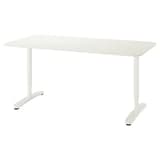
IKEA
BEKANT Desk
63-inch work surface with stable T-leg frame, built-in cable grommet, and melamine finish, the benchmark for what a sub-$200 desk should deliver.
2. IKEA ALEX Desk — Best for Built-In Storage
The ALEX Desk is the right call when drawer storage matters. At 47 inches wide, the surface is more compact than the BEKANT, but it ships with three drawers on the right side, including one with a lock. For home office workers who keep physical documents, stationery, or accessories at their desk, those drawers replace a separate storage unit that would otherwise cost $50–$100 more.
The surface stability is comparable to the BEKANT, the same adjustable feet, similar melamine finish, same assembly quality. The narrower footprint suits smaller rooms and bedroom setups where 63 inches would dominate the wall. If you don't need storage drawers, the BEKANT is the better pick for surface space. If you do, the ALEX is the better value at the same price.
Pros
- Three drawers including one with a lock, built-in storage at no extra cost
- Compact 47-inch width suits smaller rooms and bedroom office setups
- Same stable construction and adjustable feet as the BEKANT
- Available in white, black, and grey, more neutral options than the BEKANT
Cons
- 47-inch width is tighter than ideal for dual monitors
- Drawer slides are functional but not smooth, typical IKEA quality
- No cable grommet hole, cable management requires aftermarket solutions
Best for: Home office setups in smaller rooms where built-in drawer storage eliminates the need for a separate filing cabinet or organizer.
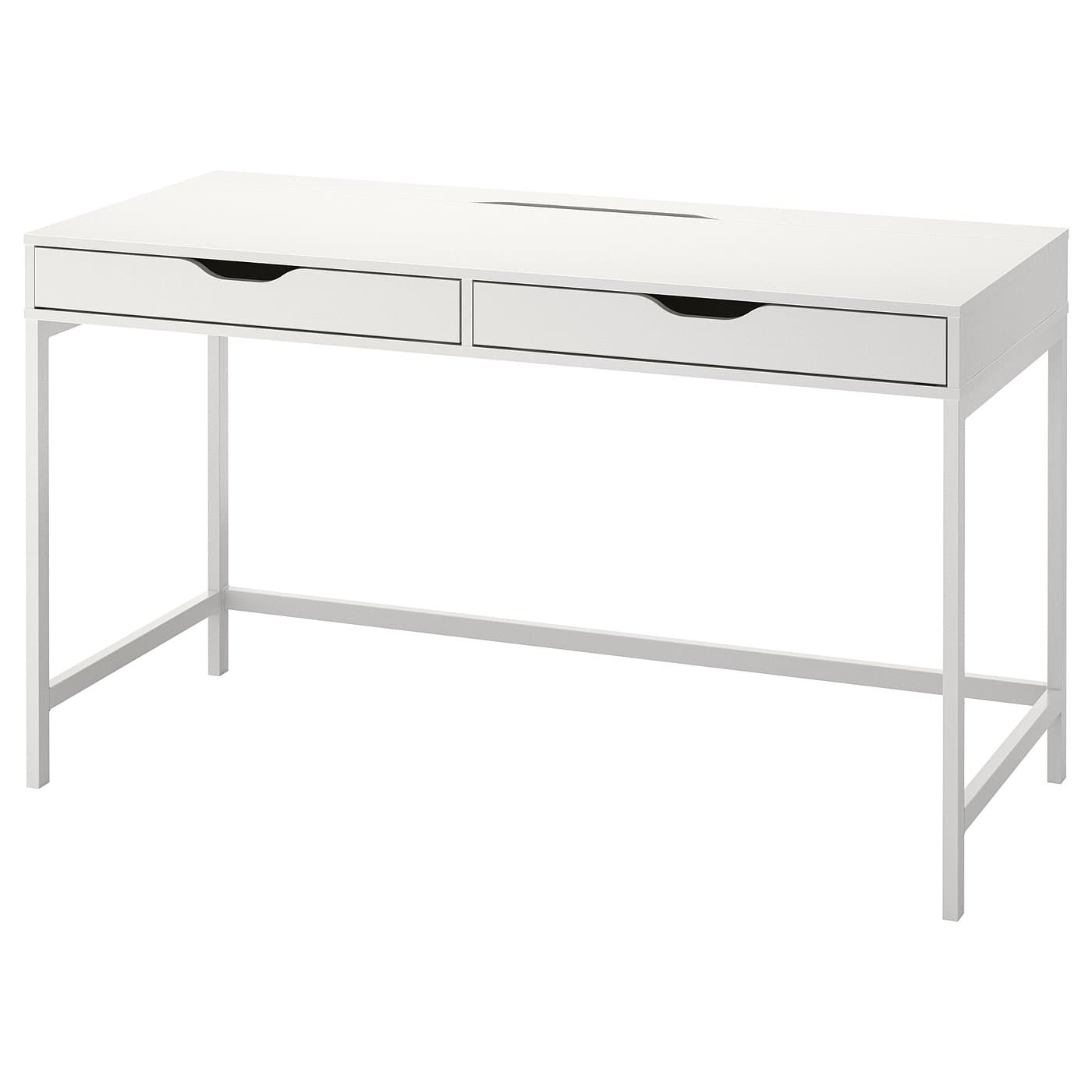
IKEA
ALEX Desk
47-inch surface with three built-in drawers including one with a lock, replaces a separate storage unit at the same price as the BEKANT.
3. FlexiSpot EN1 — Best Budget Standing Desk
The FlexiSpot EN1 is the standing desk to buy if $200 is the ceiling. It's an electric height-adjustable desk with a single motor, programmable height presets, and a surface width that ranges from 48 to 72 inches depending on the configuration you order. At roughly $199 for the base frame (surface sold separately or included in bundle deals), it competes directly with fixed desks while adding sit-stand functionality.
The single motor is the key tradeoff compared to higher-end standing desks. FlexiSpot's dual-motor models (like the E7) are meaningfully more stable at standing height. The EN1 passes the corner-push test at sitting height easily, at full standing height (45–51 inches), there's slightly more flex under heavy lateral load. For a monitor, keyboard, and laptop, it's fine. For a heavy dual-monitor arm plus accessories, the flex is noticeable.
The programmable presets are genuinely useful. Setting your sitting height and standing height once means transitions take two seconds, that's the difference between actually using the sit-stand functionality and ignoring it because adjustment is inconvenient.
Pros
- Electric height adjustment with programmable presets, transitions in under 5 seconds
- Sits at or under $200 with regular sale pricing
- 48–72 inch surface width options cover most home office configurations
- FlexiSpot's 5-year motor warranty is above average for the price
Cons
- Single motor, less stable at full standing height than dual-motor models
- Surface often sold separately, actual cost may be $230–$280 fully configured
- Assembly is more complex than a fixed desk, plan for 60–90 minutes
- Motor adds weight and complexity that fixed desks don't have
Best for: Home office workers who sit 6+ hours daily, experience afternoon energy dips, or have been told to reduce sitting time for back health, and want standing desk functionality without the $400+ price tag.
FlexiSpot
EN1 Electric Standing Desk
Single-motor electric height-adjustment with programmable presets, sit-stand functionality at the $200 price ceiling, 5-year motor warranty.
4. Walker Edison Farmhouse Desk — Best Style on a Budget
The Walker Edison Farmhouse Desk is the only pick on this list that prioritizes aesthetics alongside function, and it doesn't sacrifice much to do it. At 55 inches wide, the surface is comfortably sized for a single-monitor setup with room for accessories. The X-frame metal legs and wood-finish surface give it a look that fits farmhouse, industrial, and transitional home office aesthetics better than the utilitarian IKEA options.
At $149, it's meaningfully cheaper than the BEKANT while offering five inches less surface. The surface stability is solid, the X-frame design handles lateral push well at this price. It's not as stable as the BEKANT under heavy load, but for a standard home office setup it holds up without noticeable wobble.
Pros
- 55-inch surface at $149, best price-per-inch on this list
- X-frame design suits farmhouse, industrial, and transitional aesthetics
- Available in multiple finish combinations (wood tone + metal color variations)
- No assembly frustration, simpler construction than IKEA flat-pack
Cons
- No cable management features, no grommet, no routing provisions
- Less stable under heavy lateral load than the BEKANT
- MDF surface more susceptible to moisture damage than melamine
Best for: Home office workers who want a desk that looks intentional and styled without spending $300+ on a premium brand.
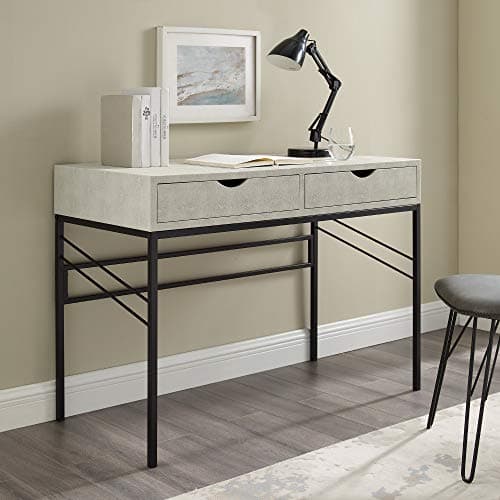
Walker Edison
Farmhouse Desk
55-inch surface with X-frame metal legs, best price-per-inch on this list and the only pick that prioritizes aesthetics alongside function.
5. Yaheetech Computer Desk — Best for the Tightest Budget
At $79, the Yaheetech is the entry point for people who need a functional desk immediately without spending much. It's a 47-inch steel-frame desk with a particleboard surface, functional, basic, and honest about what it is. The frame is more stable than the price suggests. The surface won't impress anyone, but it holds a monitor and keyboard without complaint.
This isn't the desk you buy if you have flexibility. It's the desk you buy when the budget is genuinely tight, you're furnishing a temporary setup, or you need a secondary surface for a printer and peripherals. For primary all-day use, the Yaheetech will do the job, but the surface finish and build quality are noticeably below the BEKANT and Walker Edison.
Pros
- Under $80, the lowest price on this list by a significant margin
- Steel frame is more stable than the price implies
- Ships fast and assembles in under 30 minutes
- Fine for temporary setups, secondary surfaces, or tight budgets
Cons
- Particleboard surface scratches easily and doesn't hold up to moisture
- No cable management features
- 47-inch width is the minimum comfortable size for most setups
- Not a long-term solution for 6–8 hour daily use
Best for: Budget-constrained buyers, temporary setups, or secondary desk surfaces, not a primary workstation for full-time use.
Yaheetech
Computer Desk
47-inch steel-frame desk at the lowest price on this list, functional for temporary setups or secondary surfaces, not a long-term primary workstation.
6. Sauder Beginnings Desk — Best Traditional Look
The Sauder Beginnings Desk offers a traditional furniture aesthetic that neither IKEA nor Walker Edison matches. At $109 and 47 inches wide, it's a laminate-surface desk with a classic rectangular form, no X-frames, no Scandinavian minimalism, just a standard desk shape that fits conventional home office and study room setups. Sauder has been making residential furniture for decades and the construction quality reflects that heritage.
The surface is adequate for a monitor and keyboard setup. The frame is stable enough for normal use. There's no standout feature here, the Sauder Beginnings earns its spot for buyers who want a conventional desk shape and don't want to assemble something from IKEA.
Pros
- Traditional desk aesthetic fits conventional home office and study room setups
- Sauder brand reliability, a company with a decades-long track record
- No-fuss assembly compared to IKEA flat-pack systems
- $109 price leaves budget room for accessories and upgrades
Cons
- Laminate surface less durable than melamine, more vulnerable to scratches
- 47-inch width is limiting for anything beyond a basic single-monitor setup
- No cable management features
- More traditional styling may feel dated in modern home office contexts
Best for: Buyers who want a conventional desk shape at a mid-budget price without the IKEA flat-pack assembly experience.
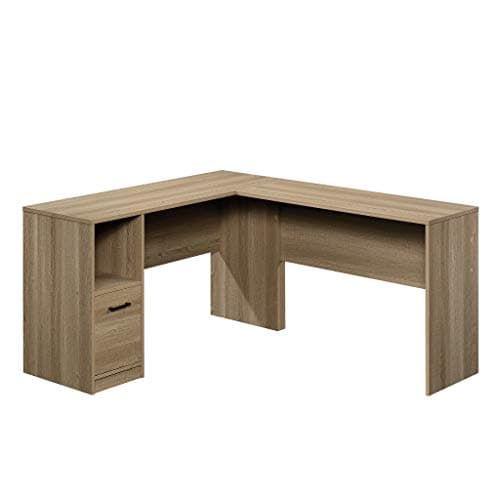
Sauder
Beginnings Desk
Traditional desk shape with decades of Sauder build reliability, straightforward assembly without IKEA flat-pack, $109 leaves budget room for accessories.
Is the FlexiSpot EN1 Standing Desk Actually Worth It Under $200?
The standing desk question at this price point comes down to your sitting hours and your specific back situation. A 2023 study published in the British Journal of Sports Medicine found that replacing just two hours of daily sitting with standing or light movement was associated with meaningful reductions in back pain and fatigue (British Journal of Sports Medicine, 2023). If you're sitting 6+ hours daily, that finding is relevant to your desk choice.
Citation capsule: Research published in the British Journal of Sports Medicine in 2023 found that replacing two hours of daily sitting with standing or light activity was associated with lower back pain scores and reduced fatigue in desk-based workers (British Journal of Sports Medicine, 2023). For the roughly 58% of U.S. workers who work fully or partially remotely, per the Bureau of Labor Statistics (BLS, 2024), this evidence makes a standing desk a practical health consideration, not just a productivity trend.
Who Should Prioritize a Standing Desk
Three situations push toward the FlexiSpot EN1 over a fixed desk: you sit more than six hours daily at a desk, you experience back pain or stiffness after long work sessions, or you notice a consistent energy drop in the early afternoon. All three are physical signals that static sitting is affecting your body. A height-adjustable desk doesn't solve the problem completely, you still need to use it, but it makes the behavioral change easy enough that most people actually do it.
The EN1's Honest Tradeoffs
The EN1 is a single-motor desk. At standing height, there's more lateral flex than you'd get from a dual-motor model like the FlexiSpot E7. For a monitor and keyboard, that's fine. For heavy dual-monitor arms with large screens, the flex is noticeable under lateral pressure. It's not unsafe; it's just less solid than a $400 standing desk.
Assembly is also more involved than a fixed desk. Plan for 60–90 minutes, not 30. The motor and lifting column system requires more care than a bolt-the-legs-on construction. The result is solid, but the process takes longer.
Is it worth it over a fixed desk? For 6+ hours of daily sitting, yes. For lighter use or a truly tight budget, a fixed desk plus a standing desk converter is a more flexible alternative, you can add the converter later without replacing the desk. For readers who want to see the full standing desk market without a price ceiling, the best standing desks in 2026 guide covers every tier.
[CHART: Line chart, sitting hours per day vs. reported back pain prevalence among remote workers, British Journal of Sports Medicine 2023]
How to Make Any Budget Desk Look and Feel Like a Premium Setup
Three targeted upgrades, costing under $100 combined, do more for a budget desk than most buyers expect. A 2022 study by the International Journal of Environmental Research and Public Health found that workspace organization and visual tidiness directly correlate with self-reported productivity and focus among home office workers (IJERPH, 2022). The upgrades below address exactly that: they make a $150 desk look intentional, reduce visual clutter, and improve the physical experience of working at it.
[UNIQUE INSIGHT] The order of impact matters. Cable management produces the biggest visual transformation per dollar, an under-desk cable tray costs $15–$25 and completely removes the wire tangle that makes even expensive desks look cheap. A desk mat produces the biggest tactile improvement, the surface feel changes immediately. A monitor arm produces the biggest functional improvement by reclaiming 8–12 inches of surface space. Do them in that order if budget is phased.
Desk Mat ($20–$40)
A large desk mat (ideally 31"–47" wide) protects the surface from scratches, eliminates the cold or cheap feel of bare MDF or melamine, and anchors the visual style of the setup. It doesn't make the desk more functional, it makes it feel better to use every day. Leather-look mats add a premium feel. Fabric mats add warmth. Either works. This is the cheapest upgrade with immediate payoff.
Under-Desk Cable Tray ($15–$25)
Screw-mount cable trays attach under the desk surface and hold power strips, cables, and adapters out of sight. The before-and-after visual difference is significant. On the BEKANT and Walker Edison, which have accessible undersides, installation takes about 10 minutes. The Yaheetech's thinner surface requires shorter screws, worth checking before ordering. A cleaner cable situation also makes it easier to dust and maintain the desk over time.
For a deeper look at cable management options beyond the tray, the cable management guide covers desk-specific solutions for every budget.
Monitor Arm ($35–$80)
A monitor arm replaces the desk-footprint stand that comes with most monitors, typically 6–10 inches deep, and moves the screen off the surface entirely. That reclaims meaningful desk real estate and improves ergonomics: monitor arms allow precise height and tilt adjustment that fixed stands don't. On a 47-inch desk like the ALEX or Yaheetech, the space recovered by a monitor arm transforms the setup from tight to comfortable.
Entry-level single monitor arms start at $35. Dual arms start at $65. Both are worth the cost on any desk in this guide.
For finishing touches on a full desk setup, organizers, trays, and accessories, the desk organizers guide covers what's worth buying and what isn't. For compact desks specifically, small home office desk ideas shows setups built around 48-inch and smaller surfaces.
[IMAGE: Before-and-after of a budget desk setup, left side with cluttered cables and no mat, right side with cable tray, desk mat, and monitor arm, search terms: home office desk setup transformation cable management]
Most home office workers don't need to spend more than $200 on a desk. The IKEA BEKANT delivers a 63-inch work surface, a clean look, and a cable grommet hole for $179. The FlexiSpot EN1 answers the standing desk question at the same price ceiling. Either way, the desk is rarely the limiting factor in a productive home office, the peripherals, chair, and lighting matter more than the surface they sit on.
The six desks above cover every real need in this price range: maximum surface space, built-in storage, standing functionality, budget aesthetics, the tightest budget, and a traditional look. Pick the one that matches your constraint and spend the savings on the chair and monitor arm. Your back will notice the difference before your desk does.
For the full picture, desk, chair, monitor, and accessories in one prioritized budget plan, the home office setup under $500 guide builds the complete workspace from this desk forward.