Every interruption at home costs you more than the interruption itself. A UC Irvine study by Gloria Mark found it takes an average of 23 minutes and 15 seconds to fully regain deep focus after being pulled away from a task. Multiply that by a noisy home office — HVAC hum, street traffic, a neighbor's dog — and you start to see why 47% of remote workers name noise as their number one productivity problem (Jabra State of Collaboration, 2024, brand-commissioned research).
The right pair of noise-cancelling headphones doesn't fix your environment. It removes it from the equation. The Sony WH-1000XM6 is the best overall pick for home office use in 2026, best-in-class ANC, 30-hour battery, and multipoint Bluetooth that lets you jump between your laptop and phone without pairing manually.
But "best overall" isn't the same as best for your situation. A Zoom-heavy workday calls for a different answer than a deep-focus writing session. This guide ranks all seven picks by the axis that matters most to you. For call-specific setup advice beyond the headphone itself, our home office video call setup guide covers lighting, camera, and microphone positioning in order of impact.
TL;DR: The Sony WH-1000XM6 (~$449) is the best noise-cancelling headphone for most home office workers in 2026, best-in-class ANC for low-frequency noise, 30-hour battery, and multipoint Bluetooth. For call-heavy workdays, the Jabra Evolve2 55 wins. Budget pick: Anker Soundcore Q45 at ~$79. According to Jabra's 2024 research, 74% of workers feel mentally tired in loud environments, the right ANC headphone is a genuine productivity tool, not a luxury.
Quick Picks
| Headphone | Price | Best For |
|---|---|---|
| Sony WH-1000XM6 | ~$449 | Best overall, ANC + all-day wear |
| Bose QuietComfort Ultra | ~$449 | Best comfort + glasses wearers |
| Apple AirPods Max 2 | ~$549 | Best for Apple ecosystem |
| Sony WH-1000XM5 | ~$250–280 | Best value / budget upgrade |
| Jabra Evolve2 55 | ~$218–269 | Best for calls (Teams/Zoom certified) |
| Bose QuietComfort 45 | ~$199–229 | Best mid-range comfort |
| Anker Soundcore Q45 | ~$79–99 | Best budget pick |
Why Noise-Cancelling Headphones Matter for Home Office Focus
Forty-seven percent of remote workers cite noise as their top productivity barrier, and 74% report feeling mentally tired after working in loud environments (Jabra State of Collaboration, 2024). Those aren't comfort statistics, they're cognitive load statistics. Mental fatigue degrades the same executive functions you use to write, analyze, and problem-solve.
The cognitive cost is well-documented. Gloria Mark's UC Irvine research found the 23-minute recovery window holds across different interruption types, meaning even low-level ambient distraction, the kind that doesn't fully break your concentration but keeps pulling at it, accumulates real cognitive debt over a workday. HVAC cycles, traffic surges, and appliance noise all qualify.
ANC headphones work by reducing that ambient load. They don't make your home office silent, but they reduce the sensory background noise your brain has to filter out continuously. That reduction matters more than most productivity guides acknowledge. If your work involves sustained attention, writing, coding, financial analysis, design, the ROI on a good ANC headphone is faster than it looks.
Multipoint Bluetooth, the ability to connect to two devices simultaneously, is the most-requested feature by remote workers according to Jabra's 2024 data. It's the kind of practical detail that separates a headphone designed for office use from one designed for commuting.
Citation capsule: Jabra's 2024 State of Collaboration report (brand-commissioned) surveyed remote and hybrid workers globally and found 47% identify noise as their top productivity problem and 74% report mental fatigue in loud working environments. The report also identified multipoint Bluetooth as the most requested headphone feature among remote workers, cited more than call quality, battery life, or ANC strength (Jabra State of Collaboration, 2024).
The ANC vs. Speech Problem Nobody Talks About
ANC works exceptionally well against steady-state low-frequency noise, HVAC hum, traffic rumble, plane engines, refrigerator cycles. It doesn't work nearly as well against speech. A 2024 study published in Applied Acoustics found ANC headphones reduced speech intelligibility by only 9–14 dB (Applied Acoustics, 2024), far short of the 20+ dB reduction needed to make nearby conversation genuinely unintelligible.
This is the gap that most headphone reviews skip. If you're working from a shared apartment, a busy coffee shop, or a home where other people are talking, even the best ANC headphones won't fully block human speech. The frequency range of conversational speech overlaps with the range where ANC is weakest.
The practical fix is pairing ANC headphones with a white noise app. Tools like myNoise or Brain.fm add a mid-frequency masking layer that fills the speech-frequency gap ANC leaves open. ANC handles the low-frequency steady-state noise; the white noise app handles voice frequencies. Together, they get closer to the cognitive quiet that a private office would provide.
The White Noise Pairing Tip
ANC alone reduces speech by only 9–14 dB, not enough to block nearby conversation. Pair your noise-cancelling headphones with a white noise app like myNoise or Brain.fm. ANC handles the low-frequency hum; the white noise app covers the speech frequencies ANC can't. The combination outperforms either approach alone.
Understanding this limitation helps you set realistic expectations and choose the right headphone for your environment. If your biggest noise problem is HVAC and street traffic, any of the top picks here will solve it. If speech is the main issue, you need ANC plus a masking strategy.
Full Reviews: The 7 Best Noise-Cancelling Headphones for Work
Sony WH-1000XM6 — Best Overall
The Sony WH-1000XM6 delivers the strongest ANC for low-frequency noise in this category, with 30-hour battery life, multipoint Bluetooth, and a fold-flat design that makes it genuinely portable. It's the benchmark that every other ANC headphone gets measured against in 2026.
Specs snapshot:
- ANC: Best-in-class for HVAC, traffic, and steady-state low-frequency noise
- Battery: 30 hours (ANC on), 3-minute quick charge for 3 hours playback
- Bluetooth: Multipoint (2 devices simultaneously), Bluetooth 5.3
- Microphones: Improved call mics vs. XM5, still secondary to Jabra for voice
- Design: Fold-flat, 250g, carrying case included
- Price: ~$449
What it's great for: Deep-focus work sessions, open-plan home offices with heavy HVAC and ambient noise, and anyone who switches between a laptop and phone constantly throughout the day. Speak-to-chat automatically pauses audio when you start talking, a small feature that prevents a surprising amount of friction during the workday.
Who should skip it: If your workday is 60%+ video calls, the XM6's call mics are good but not the best available. The Jabra Evolve2 55 is the cleaner answer for call-heavy work.
Pros
- Best-in-class ANC for low-frequency noise (HVAC, traffic, hum)
- 30-hour battery with multipoint Bluetooth for 2 devices
- Fold-flat design, genuinely portable with included case
- Speak-to-chat auto-pause reduces workflow friction
- Improved call mics over XM5
Cons
- Call mic quality trails Jabra Evolve2 55 for voice-heavy work
- At $449, premium price, XM5 at ~$280 offers ~80% of the performance
- ANC seal weakens slightly with thick-frame glasses
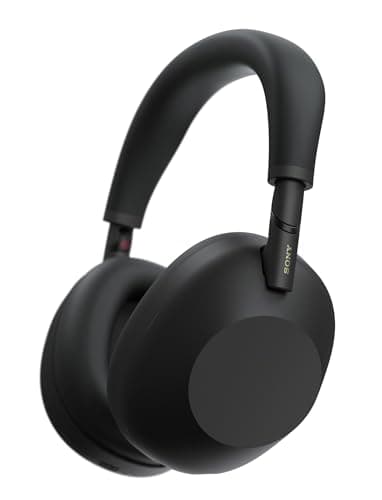
Sony
WH-1000XM6
Best-in-class ANC for low-frequency noise. 30-hour battery, multipoint Bluetooth, fold-flat design with case.
Bose QuietComfort Ultra — Best Comfort and Best for Glasses Wearers
The Bose QuietComfort Ultra matches the XM6 on ANC performance and leads the field on comfort, its PlushComfort ear cushions are the softest in this category and accommodate glasses frames better than any competitor here. If you wear glasses and have struggled with headphone comfort in the past, this is your pick.
Specs snapshot:
- ANC: Class-leading, matches XM6 for low-frequency noise reduction
- CustomTune: Microphones analyze your ear shape and calibrate ANC for your anatomy
- Immersive Audio: Spatial audio mode (unique Bose feature)
- Battery: 24 hours (ANC on)
- Bluetooth: Multipoint, Bluetooth 5.3
- Design: Does not fold flat, less portable than XM6
- Price: ~$449
What it's great for: All-day wear, glasses wearers, anyone who's had comfort issues with tighter-clamping headphones, and users who want spatial audio without committing to the Apple ecosystem. CustomTune is a genuine differentiator, most ANC headphones apply a fixed cancellation profile; Bose calibrates it to your specific ear geometry.
Who should skip it: The QC Ultra doesn't fold flat, which makes it awkward to pack for anyone who moves between a home office and other work locations. If portability matters, the XM6 handles travel better.
Pros
- Most comfortable ear cushions in this category, glasses-friendly
- CustomTune adapts ANC profile to your ear shape
- Immersive Audio spatial mode adds genuine value for music and focus playlists
- Matches XM6 on ANC performance for steady-state noise
Cons
- No fold-flat design, bulky to pack or store
- 24-hour battery vs. XM6's 30 hours
- Same $449 price as XM6 with slightly less portability
Glasses Wearers: Start Here
Glasses frames break the ear cup seal on most headphones, which weakens both ANC performance and passive isolation. The Bose QC Ultra's PlushComfort cushions are soft enough to maintain a reasonable seal even with thick temple pieces. It's the most forgiving design in this field for eyeglass wearers.
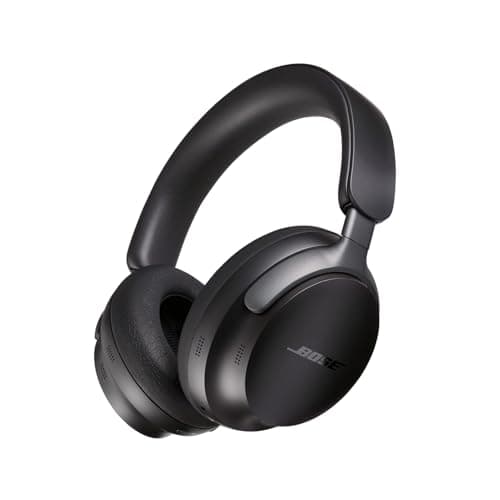
Bose
QuietComfort Ultra
CustomTune adapts ANC to your ear shape. Most comfortable ear cushions, glasses-friendly PlushComfort design.
Apple AirPods Max 2 — Best for Apple Ecosystem
The AirPods Max 2 ($549) is the right answer for a specific user: someone deep in the Apple ecosystem who values seamless device switching above all else. The H2 chip delivers excellent ANC and the Transparency mode is best-in-class for letting in ambient audio when you need it. The USB-C port (upgraded from Lightning in the 2nd gen) was the most meaningful hardware change.
Specs snapshot:
- ANC: Excellent, H2 chip-driven, comparable to XM6 for low-frequency noise
- Transparency mode: Best in class, sounds remarkably natural when enabled
- Spatial Audio: With head tracking, works across Apple devices
- Battery: ~20 hours (ANC on)
- Connectivity: Seamless Apple device switching; not true multipoint for non-Apple devices
- Design: No fold-flat, steel and aluminum build, ~385g (heaviest on this list)
- Price: ~$549
What it's great for: Mac + iPhone + iPad users who want to switch between devices with zero friction. The H2 chip's Adaptive Audio mode, which blends ANC and Transparency dynamically, is genuinely useful in a home office where you might need to hear a doorbell or a family member.
Who should skip it: Anyone using Windows, Android, or a mixed-device setup. The AirPods Max's best features are iOS-exclusive. At $549, you're paying a significant premium for ecosystem integration, the XM6 and QC Ultra deliver comparable ANC at $100 less with broader device compatibility.
Pros
- Seamless switching across Apple devices, Mac, iPhone, iPad with zero friction
- H2 chip delivers excellent ANC and best-in-class Transparency mode
- Adaptive Audio blends ANC and Transparency dynamically
- Spatial Audio with head tracking, genuinely immersive
- USB-C charging (upgraded from Lightning in 2nd gen)
Cons
- Best features are iOS-exclusive, Windows/Android users miss most of the value
- $549 price sits $100 above XM6 and QC Ultra for comparable ANC
- No true multipoint for non-Apple devices
- No fold-flat design, heaviest on this list at ~385g
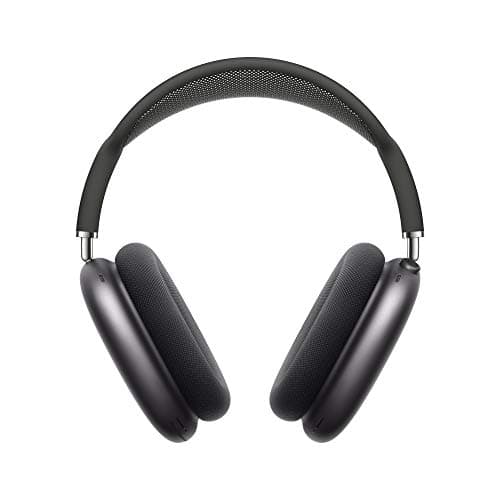
Apple
AirPods Max
Seamless switching across Mac, iPhone, iPad. H2 chip, Adaptive Audio mode, USB-C charging.
Sony WH-1000XM5 — Best Value
The XM5 uses the same core ANC engine as the XM6, tuned slightly less aggressively. In most home office environments, HVAC, traffic, ambient household noise, the ANC performance difference between XM5 and XM6 is real but not dramatic. At $250–280 (frequently on sale), the value case is strong.
Specs snapshot:
- ANC: Excellent, marginally below XM6, undetectable to most users in typical environments
- Battery: 30 hours (same as XM6)
- Bluetooth: Multipoint, Bluetooth 5.2
- Design: Does not fold flat (unlike XM4 or XM6)
- Price: ~$250–280 (frequently on sale)
What it's great for: Anyone who wants XM6-class performance at a meaningfully lower price. If you're replacing older headphones or buying your first premium ANC pair, the XM5 is where the value curve peaks in this category.
Who should skip it: XM5 owners considering the XM6 upgrade, the performance gain doesn't justify the price delta if you already own XM5s. Buy the XM6 if you're starting fresh or if call quality is a priority.
Pros
- XM6-class ANC at $250–280, best price-to-performance on this list
- 30-hour battery life, same as the XM6
- Multipoint Bluetooth for 2 simultaneous devices
- Frequently on sale, value improves further with discounts
Cons
- Does not fold flat (unlike XM4 or XM6)
- Call mic quality trails Jabra Evolve2 55 for voice-heavy work
- Slight ANC gap vs. XM6 in very loud environments
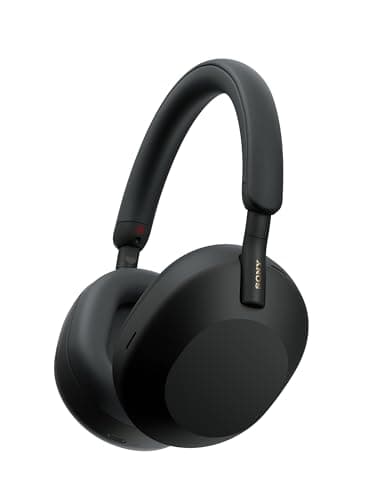
Sony
WH-1000XM5
8-mic array with dual noise-sensor processors. 30-hour battery, multipoint pairing, speak-to-chat auto-pause. Better value than the XM6 for most users.
Jabra Evolve2 55 — Best for Calls
The Jabra Evolve2 55 is engineered for business communication first, music second. Its 6-microphone array, with 3 mics dedicated to voice capture, delivers call audio clarity that neither Sony nor Bose approaches. It's certified for Microsoft Teams and Zoom, meaning it's been validated for the actual platforms most remote workers use daily.
Specs snapshot:
- Microphones: 6-mic array (3 dedicated voice mics) with flip-down boom arm
- Certifications: Microsoft Teams, Zoom certified
- ANC: Good, solid for HVAC and office ambient noise, not class-leading vs. XM6/QC Ultra
- Battery: Up to 37 hours
- Bluetooth: Multipoint, Bluetooth 5.0
- Design: Professional/bulkier aesthetic; foam-padded headband
- Price: ~$218–269
What it's great for: Remote workers whose workday is dominated by video calls. The flip-down boom arm positions a dedicated mic much closer to your mouth than any standard built-in mic can reach. If your colleagues regularly comment on audio quality during calls, this headphone fixes that.
Who should skip it: Users who primarily need focus-mode ANC with excellent music playback. The Evolve2 55 is effective but not the most enjoyable listening experience. If your call load is light, the XM6 or QC Ultra gives you better ANC and better audio.
Pros
- 6-mic array with dedicated voice mics, best call quality on this list
- Flip-down boom arm gets the mic close to your mouth
- Microsoft Teams and Zoom certified, validated for real work platforms
- 37-hour battery, longest on this list
- Comfortable for all-day professional wear
Cons
- Bulkier, more professional aesthetic, won't suit everyone
- ANC is good but not class-leading for pure focus use
- Music listening experience is functional, not exceptional
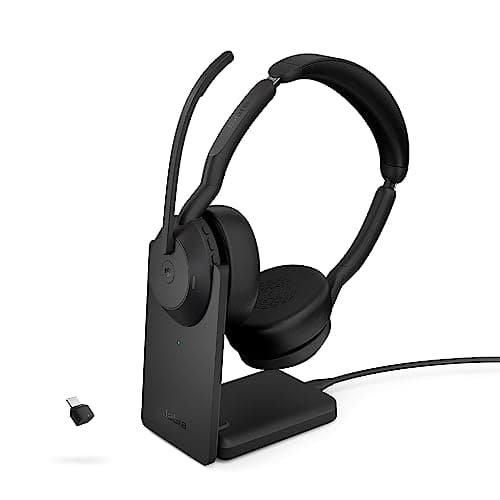
Jabra
Evolve2 55
10-mic array optimized for call clarity in noisy spaces. Certified for MS Teams and Zoom. 56-hour battery, dual connectivity (USB + Bluetooth).
Bose QuietComfort 45 — Best Mid-Range Comfort
The QC45 is the predecessor to the QC Ultra, it doesn't have CustomTune or Immersive Audio, but it has the same Bose comfort heritage at $199–229. For users who want all-day wearing comfort without spending $449, the QC45 hits the right balance.
Specs snapshot:
- ANC: Quietmode (full ANC) + Aware mode (transparency), strong but below QC Ultra
- Battery: 24 hours
- Bluetooth: Multipoint support (check firmware version, some older units require update)
- Design: Folds flat
- Price: ~$199–229
What it's great for: Anyone who prioritizes comfort for long wearing sessions and doesn't need the top tier of ANC performance. The QC45 folds flat (unlike the QC Ultra), making it more portable and easier to store. If you've found Sony headphones uncomfortable or tiring after a few hours, Bose's ear cup design is a meaningful alternative.
Who should skip it: Users who need the strongest possible ANC for a very loud home environment. Step up to the QC Ultra or XM6 if HVAC, traffic, or construction noise is the primary problem. For call quality, the Jabra wins at a similar price.
Pros
- Signature Bose comfort, light clamping force holds up over long wearing sessions
- Folds flat, more portable than QC Ultra
- Quietmode (full ANC) + Aware mode (transparency)
- 24-hour battery at a mid-range price point
Cons
- ANC performance noticeably below QC Ultra and XM6
- No CustomTune or Immersive Audio, those are QC Ultra-only features
- Multipoint requires firmware update on some older units
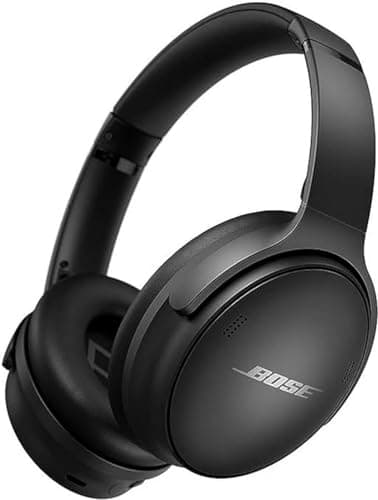
Bose
QuietComfort 45
Same Bose comfort heritage as the QC Ultra at ~$200 less. Folds flat, 24-hour battery, Quietmode + Aware mode. Best for all-day wearing without the premium price.
Anker Soundcore Q45 — Best Budget
At $79–99, the Soundcore Q45 delivers more ANC than its price suggests, multi-mode ANC with app-controlled adjustment, 50-hour battery, and multipoint Bluetooth. The ANC won't compete with Sony or Bose against heavy-duty noise, but it handles HVAC hum and moderate ambient noise competently.
Specs snapshot:
- ANC: Multi-mode (transport, indoor, outdoor), effective for steady-state noise, weaker against speech
- Battery: 50 hours (exceptional, best on this list by a wide margin)
- Bluetooth: Multipoint, Bluetooth 5.3
- App: Soundcore app with EQ and ANC mode control
- Build: Plastic, lighter than premium options but less premium feel
- Price: ~$79–99
What it's great for: First-time ANC headphone buyers, users on a strict budget, and anyone who needs extraordinary battery life. The 50-hour battery is remarkable at this price, charge it Sunday, use it all week.
Who should skip it: Users working in genuinely loud home environments who need the ANC to do heavy lifting. The Q45's ANC is noticeably less effective against speech than the XM6 or QC Ultra. If your noise problem is severe, the gap in ANC performance justifies the additional cost of a premium pair.
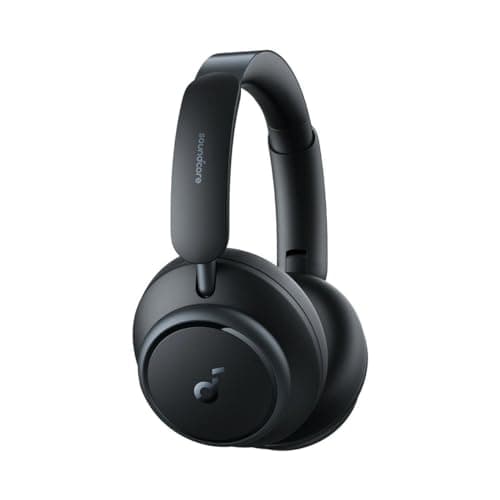
Anker
Soundcore Q45
Multi-mode ANC with app control. 50-hour battery, best on this list by a wide margin. Multipoint Bluetooth 5.3. Best for steady-state noise on a strict budget.
How to Choose the Right Noise-Cancelling Headphone for Your Work Style
Most noise-cancelling headphone guides sort by ANC score. That's useful, but it's incomplete for home office buyers, because your primary use case determines which spec matters most. Here's how to think through it.
Your primary problem is ambient noise (HVAC, traffic, hum): The Sony XM6 or Bose QC Ultra will solve this. Both deliver best-in-class ANC for low-frequency steady-state noise. The choice between them comes down to portability (XM6 wins, fold-flat) vs. comfort (QC Ultra wins, PlushComfort cushions).
Your primary problem is being on calls all day: The Jabra Evolve2 55 is the clear answer. Its 6-mic array and boom arm deliver call audio that no over-ear consumer headphone matches. Teams and Zoom certification matters, these platforms optimize for certified devices.
You wear glasses: Start with the Bose QC Ultra. Its ear cushions are soft enough to maintain a reasonable seal despite temple pieces. The XM6 seal weakens with thick frames. If you're spending $449 either way, glasses wearers should lean Bose.
You're in the Apple ecosystem: AirPods Max 2 is the choice if seamless switching between Mac, iPhone, and iPad is worth a $100 premium over the XM6. If you're Windows + iPhone or mixed-device, the ecosystem lock-in isn't worth it.
You're budget-limited: Sony XM5 at ~$280 is the premium value pick. Anker Soundcore Q45 at ~$85 is the legitimate budget pick with a remarkable 50-hour battery. Don't buy anything between $100–200 in this category, the value gap is real.
Whichever headphone you choose, pair it with a quality webcam for your home office so the other half of your remote work setup, how you look and sound on camera, matches the audio quality you're putting in your ears.
Citation capsule: Jabra's 2024 State of Collaboration report identified multipoint Bluetooth as the most-requested headphone feature among remote workers, ranked above call quality, ANC strength, and battery life. Among the seven headphones on this list, all except the AirPods Max 2 (which handles multipoint differently within the Apple ecosystem) support true multipoint Bluetooth, connecting to two devices simultaneously (Jabra State of Collaboration, 2024).
Does Your Chair Affect How Long You Can Wear Headphones?
We've found that headphone comfort and chair comfort are more connected than most people realize. If your chair puts you in a poor posture, head forward, shoulders rounded, the clamping pressure from over-ear headphones shifts to a different part of your skull. Headphones that feel comfortable for 30 minutes in a showroom can become genuinely painful after 4 hours in a poorly supported seated position.
If you're spending 6+ hours in headphones, the ergonomics of your chair matter to the headphone experience. Our guide to ergonomic chairs under $300 covers the seated posture side of the equation. And if you're setting up a new desk environment from scratch, the bedroom home office ideas post covers acoustic and layout considerations that reduce how much noise-cancelling work your headphones have to do in the first place.
Which Noise-Cancelling Headphone Should You Buy?
Noise is a solvable problem. Forty-seven percent of remote workers identify it as their top productivity issue (Jabra State of Collaboration, 2024), but it doesn't require a perfect home office to fix, it requires the right noise-cancelling headphone for your specific environment and work style.
For most people: the Sony WH-1000XM6 at ~$449. Best-in-class ANC, 30-hour battery, fold-flat portability, and multipoint Bluetooth that keeps pace with a multi-device remote work setup. If $449 is too much, the Sony WH-1000XM5 at ~$280 gives you 80% of that performance at a meaningfully lower price.
For call-heavy workers: the Jabra Evolve2 55. No consumer headphone matches its call audio quality for the Teams and Zoom generation.
For glasses wearers: the Bose QuietComfort Ultra. Comfort is not a secondary consideration at $449, it's the reason to choose one class-leading headphone over another.
Remember that ANC handles the low-frequency steady-state noise but leaves a gap at speech frequencies. A white noise app fills that gap. Together, they're as close to a private office as remote work gets. For a full guide on reducing noise before it reaches your ears, see how to soundproof a home office, it covers every layer from door seals to acoustic panels.
For the rest of your home office setup, our monitor comparison guide and ergonomic chairs under $300 cover the two biggest remaining productivity variables. For the habits and routines that make the physical setup compound over time, the work from home productivity guide covers 15 evidence-backed practices worth building.